
The global shift towards electric vehicles is accelerating rapidly. This surge creates a massive demand for reliable charging infrastructure. A key component is the smart EV charging station. These stations offer more than just electricity. They provide intelligent energy management and connectivity. Understanding their cost is crucial for businesses and homeowners. This article explores the typical pricing for these advanced systems. We will also examine the various types available today. Finally, we will look at innovative companies leading this industry.
Understanding Smart Charging Technology
A smart EV charging station is fundamentally different from a basic model. It connects to the internet and a central management system. This allows for remote monitoring and control of charging sessions. Users can schedule charging during off-peak electricity hours. This simple feature can lead to significant cost savings. Operators can also manage power distribution dynamically. This prevents electrical circuits from becoming overloaded. Furthermore, these stations enable secure user authentication. They also process digital payments seamlessly. These features make the smart EV charging station a wise investment.
Key Factors Influencing the Final Price
The cost of a smart EV charging station is not a single number. Several critical factors determine the final price. Firstly, the power output, measured in kilowatts (kW), is a major driver. A higher kW rating typically means a faster charging time. Consequently, it also means a higher equipment cost. Secondly, the number of charging connectors affects the price. A dual-port station costs more than a single-port unit. Thirdly, installation complexity can vary dramatically. For example, electrical upgrades can add substantial expenses. Additionally, network subscription fees for software are a recurring cost. Permits and local regulations also impact the total budget.
Commercial DC Fast EV Charging Stations
Commercial DC EV charging stations are the powerhouses of public infrastructure. They are designed for locations requiring rapid charging. Consequently, they represent a significant investment. These stations deploy in various public and private settings. Common applications include supermarket parking lots and office complexes. They are also vital for highway service areas and public car parks. Furthermore, residential community parking lots are adopting them. Hospital parking areas and school perimeters are also key locations. Shopping mall parking decks and large corporate fleets use them too.
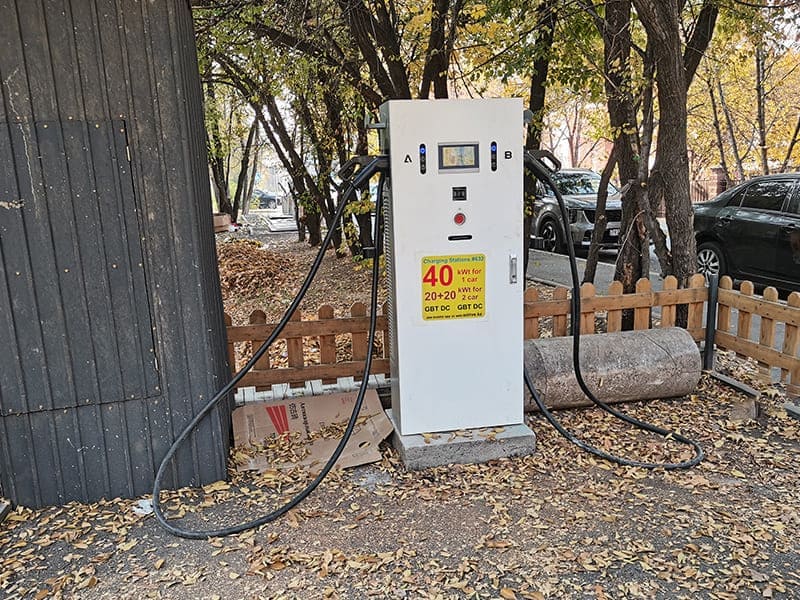
These DC stations support multiple plug types for compatibility. Standards include CCS2, CCS1, and GB/T. CHAdeMO and NACS are also widely supported. Power levels are categorized into several tiers. Common tiers are 20-40kW, 60-120kW, and 120-240kW. Some high-capacity models even reach 60-320kW. Configurations vary from dual and triple plugs to four-plug setups. Additionally, split-type charging piles offer design flexibility. This allows for a better utilization of space.
Commercial AC EV Charging Stations
AC EV chargers are ideal for longer-duration parking. They are commonly found in garages and residential area car parks. Businesses also install them for employee and visitor use. These locations allow for overnight or extended charging sessions. They are more affordable than DC fast chargers. Therefore, they are suitable for wider deployment.
These stations support several AC plug standards. Type 1 and Type 2 connectors are common. GB/T and NACS are also available options. They come in single-gun and dual-gun models. Typical power outputs are 7kW, 11kW, and 22kW. They provide a reliable and cost-effective charging solution. Their operational costs are generally lower.
Solar-Powered Integrated Charging Stations
Solar-powered stations represent the cutting edge of sustainability. They are perfect for large parking facilities. They are especially valuable in regions with high electricity costs. They are also ideal for areas with underdeveloped grid infrastructure. A photovoltaic system collects solar energy. This energy is then stored in integrated battery storage units. The stored power is subsequently released to the charging stations. This process significantly reduces operational expenses. It also lessens the strain on the local power grid.
Residential and Compact Commercial DC Chargers
The market now offers compact DC fast chargers for homes. These units provide 20kW or 30kW of power. They feature a simple one-button start operation. They are known for their user-friendly interface and rapid charging speed. Importantly, they come at a relatively low price point. A similar commercial-grade model is also available. This 20kW-30kW simple fast charger is perfect for factories. It is also well-suited for residential communities. It offers a balance of speed and affordability.
Introducing Aegen: Your Charging Partner
Aegen is a leading manufacturer in the EV charging sector. The company provides complete charging station solutions. It also supplies individual components and parts. Aegen offers comprehensive technical service support for free. Furthermore, it provides extensive customization services. The company collaborates with numerous EV charger distributors. It also works with EV charging station assembly plants. Additionally, it partners with installation companies nationwide. How to Choose the Best Commercial EV Charging Station for Your Business Model?
Ensuring Reliability with Aegen Testers
Aegen produces a critical tool for the industry: the EV charger tester. This device is supplied to installation and assembly enterprises. It is designed to verify communication protocols. The charging detection equipment ensures effective data exchange. Therefore, it guarantees that every smart EV charging station functions correctly before use. This prevents future operational failures and enhances safety.
Conclusion: A Strategic Investment for the Future
In conclusion, the price of a smart EV charging station varies widely. A basic residential AC unit may cost a few thousand dollars. A powerful commercial DC station can cost hundreds of thousands. The final cost depends on power, features, and installation needs. However, the long-term benefits are substantial. These include energy savings, user convenience, and future-proofing. Companies like Aegen are vital to this ecosystem. They provide the hardware, software, and testing tools needed for success. Investing in a smart charging infrastructure is no longer a luxury. It is a necessity for a sustainable, electric future.