
As Aegen, we specialize in EV charging station production. We often hear this key question. Operators seek complete EV charging station details for planning. We will explore reliable information sources here. Commercial success requires thorough technical knowledge. This includes power specifications and connector types. Our guide aims to provide clear answers. We serve global markets with reliable charging solutions. Trust our expertise in this detailed overview.
Identifying Key Information Requirements
First, commercial operators must define their needs. Critical EV charging station details include power output. Connector compatibility is equally vital. Location and user demographics matter greatly. Operational costs and revenue models are crucial. Scalability for future expansion is important. Maintenance and support terms need review. Understanding these factors ensures good investment. Therefore, careful initial assessment is essential.
Manufacturer Technical Portals: The Primary Source
Manufacturer websites offer the most precise data. As a producer, Aegen provides extensive resources. Our portal lists all specifications clearly. You can find power levels and connector options. We share installation manuals and compliance certificates. Furthermore, we update information regularly. This ensures access to current Electric Vehicle charging station details. Always check the official manufacturer site first.
Analyzing Power and Connector Specifications
Commercial fast charging stations require careful power selection. Aegen offers DC stations from 20kW to 320kW. Consequently, they suit various traffic flows. Connector types include CCS1, CCS2, and GB/T. Also available are CHAdeMO and NACS standards. Multiple gun configurations enhance efficiency. For example, dual or quad guns serve more users. These EV charging station details impact site design. So, match them to your expected vehicle mix.
The Role of Distributors and Assemblers
Additionally, partner networks provide valuable insights. Aegen collaborates with global distributors. These partners offer localized project guidance. They clarify regional Electric Vehicle charging station details. Assemblers explain installation practicalities. Their hands-on experience is very beneficial. Thus, consult authorized partners for support. They bridge the gap between plans and reality.
Utilizing Configuration Tools and Calculators
Many manufacturers provide online tools. These configurators simulate station setups. You can adjust power and connector choices. Immediately, see estimated costs and outputs. This interactive approach clarifies complex EV charging station details. Moreover, it helps optimize your initial investment. We recommend using these digital planners.
Focus on Core Technology: The Charging Control Unit
The Charging Control Unit (CCU) is the core. Aegen designs and produces its own CCU. It ensures safe and efficient charging processes. This component manages communication and power flow. Understanding this detail is technically important. It differentiates high-quality stations significantly. Therefore, always inquire about the CCU origin.
Importance of Testing and Certification Data
Reliable operation depends on rigorous testing. Aegen produces EV charger testers. These devices verify station performance. Certification reports contain critical EV charging station details. They prove safety and protocol compliance. Operators should always request this documentation. Subsequently, it ensures long-term reliability.
Case Studies and Real-World Deployments
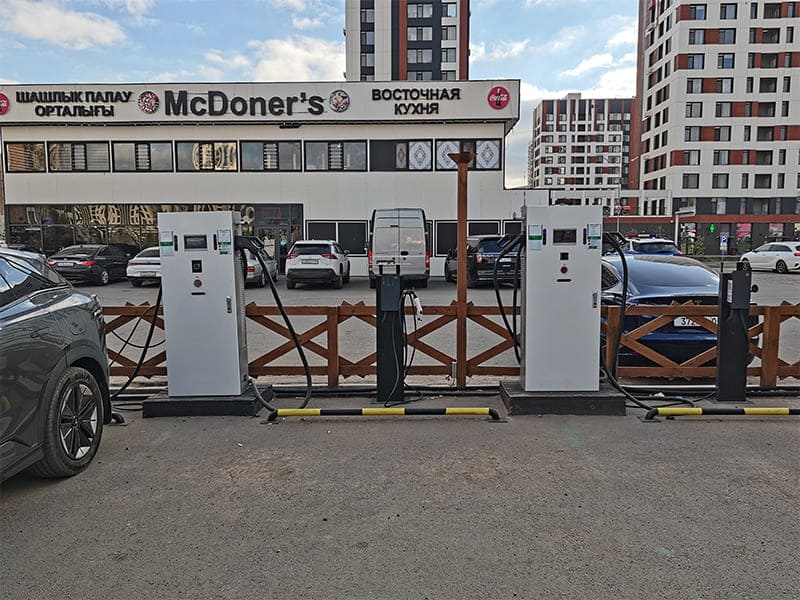
Furthermore, review existing installation case studies. Aegen stations operate across continents. Examples include high-traffic retail centers. Also, they serve airports and highway hubs. These cases show practical Electric Vehicle charging station details. They demonstrate real power usage and uptime. Learning from others prevents common pitfalls.
AC Charging Solutions for Specific Scenarios
Do not overlook AC EV charger applications. Aegen provides Type 1, Type 2, and GB/T plugs. Power levels are 7kW, 11kW, and 22kW. They are perfect for workplace parking lots. Also, they suit residential area charging points. These EV charging station details enable overnight charging. So, they complement fast DC networks effectively.
Solar and Storage Integrated Stations
For high-cost or weak grid areas, consider solar storage. Aegen’s systems store photovoltaic energy. Then, batteries release power to chargers. This detail significantly cuts electricity costs. It also promotes sustainable operations. Therefore, it is a smart long-term solution.
Simplified Fast Chargers for Fleet Use
Aegen also offers simplified fast chargers. They feature 20kW or 30kW DC output. These units have one-button start operation. Their EV charging station details highlight simplicity and value. They are ideal for dense residential zones. Moreover, they perfectly serve commercial fleets. Where should EV charging station operators install new stations for maximum profit?
Conclusion: Synthesizing Information for Success
In conclusion, finding comprehensive details is multi-faceted. Start with manufacturer technical specifications. Then, consult with experienced distribution partners. Use digital tools for configuration planning. Always prioritize core component quality. Finally, learn from deployed station performance. Aegen remains your partner in this journey. We provide complete EV charging station details for success. Contact us for your commercial project needs today.