
The pursuit of a strong EV charging station profit margin drives industry innovation. Different business models offer varying financial returns. This analysis explores the most profitable approaches. Operators must strategically choose their model. Market dynamics significantly influence outcomes. Ultimately, profitability depends on multiple key factors.
Understanding Revenue Streams and Costs
First, understanding revenue is crucial. Energy sales provide the most direct income. However, demand fees can erode profits quickly. Additionally, session fees create a steady revenue stream. Idle fees further optimize charger utilization. Strategic pricing directly boosts the EV charging station profit margin. Advertising at stations offers supplementary income. Retail partnerships also share revenue effectively. Diversification is key to financial resilience.
Meanwhile, managing costs is equally important. Equipment procurement represents the largest initial investment. Ongoing network fees also add to operational costs. Furthermore, site leasing agreements impact long-term expenses. Regular maintenance ensures reliability but costs money. Electricity costs obviously vary by region and time. Efficient operations protect the EV charging station profit margin. Smart software minimizes unnecessary expenses.
High-Volume Public Fast EV Charging station
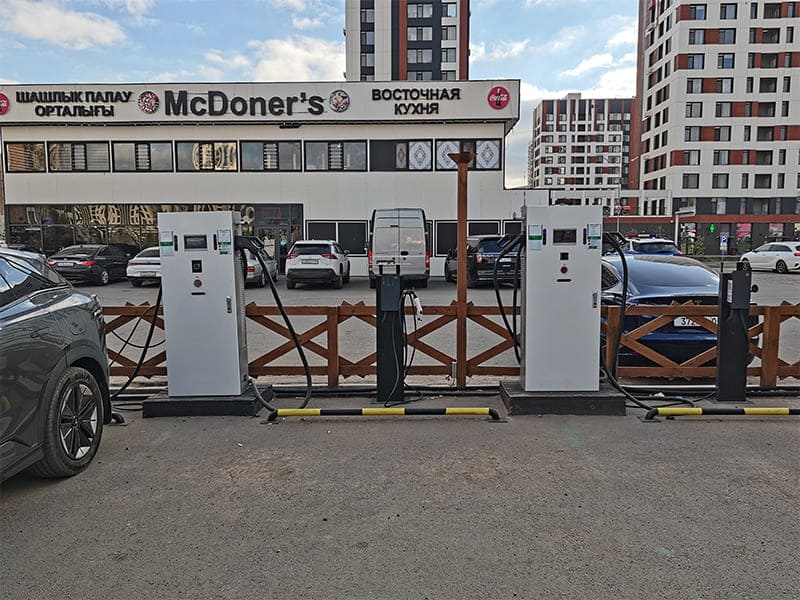
This model focuses on strategic locations. Prime spots include highway corridors and urban hubs. Consequently, drivers pay a premium for speed. High utilization rates are absolutely critical. Otherwise, equipment costs become unsustainable. Partnerships with retail brands are very beneficial. They provide essential amenities for waiting drivers. Moreover, they often share site costs effectively.
However, demand charges pose a major challenge. They can drastically reduce net earnings. Therefore, onsite storage or solar helps immensely. It smooths out power demand effectively. This model demands very high upfront capital. Yet, it can achieve the best Electric Vehicle charging station profit margin. Superior technology ensures reliability and customer loyalty.
Fleet and Workplace Charging Solutions
This approach serves commercial vehicle fleets. It also powers employee vehicles at workplaces. Therefore, utilization is predictable and often high. Contracts are typically long-term and stable. This guarantees a consistent revenue stream. Importantly, demand charges are easier to manage. Charging schedules can be optimized strategically.
Fleet operators seek total cost savings. They value reliability over cheapest rates. Consequently, they accept premium service agreements. This directly enhances the EV charging station profit margin. Workplace charging boosts employee satisfaction. Companies often subsidize the electricity cost. This model offers lower customer acquisition costs.
Residential and Multi-Unit Dwelling Focus
Here, the market is individual homeowners. It also includes apartment building residents. Hardware sales generate immediate revenue. Installation services provide further profit. Subsequently, recurring software fees add value. These include access to smart charging features. This model often has lower infrastructure costs.
Utilization per unit is relatively lower. However, aggregated networks have great value. They provide grid-balancing services profitably. The Electric Vehicle charging station profit margin comes from multiple sources. Scalability is a significant advantage here. Partnerships with property developers are key.
The Manufacturer and Supplier Role: Aegen New Energy
Companies like Aegen New Energy are vital. They manufacture home and commercial stations. They provide complete technical support freely. Customization services are also available upon request. They partner with numerous charger distributors. They also work with installation companies closely. Furthermore, they supply parts to assembly firms.
Aegen produces DC fast chargers reliably. It also makes AC home and commercial chargers. Its portable chargers are sold globally. Markets include Central Asia and the Middle East. Europe and South America are also key regions. Customer recognition and praise are widespread. Their EV charging station profit margin stems from manufacturing scale. What are the main AC and DC EV charging station components?
Hybrid and Value-Added Models
Many operators now combine different models. For example, they mix public and fleet charging. This diversification spreads financial risk effectively. Adding convenience stores is another smart strategy. It captures more spending from each visitor. Offering premium membership plans also works. These plans guarantee access and lower rates.
Value-added services boost income significantly. These include car washes or detailed diagnostics. Software platforms enable dynamic pricing strategies. This maximizes the EV charging station profit margin. Strategic partnerships are the core of this model. They create a comprehensive ecosystem for drivers.
Conclusion: Key Takeaways for Maximum Profit
No single model is perfect for all situations. The highest margins come from optimized operations. High-utilization scenarios typically perform best. Managing demand charges is non-negotiable for profit. Diversifying revenue streams builds stability. Technology and reliability drive customer retention.
Therefore, a hybrid approach often wins. It leverages multiple income sources intelligently. For manufacturers like Aegen New Energy, volume is crucial. Their global supply chain supports industry growth. Ultimately, understanding local markets determines success. The quest for a better EV charging station profit margin continues. It fuels the expansion of essential EV infrastructure.