
Understanding EV charging station pricing is the first step to profitability. Location truly dictates your revenue and long-term success.
The Core Principle of Location Value
Your station’s location directly impacts your pricing power. A busy highway spot allows for premium rates. Consequently, a remote garage requires competitive offers to attract users .
For instance, EV charging station pricing in city centers can be 20% higher than in suburbs. This difference stems from higher foot traffic and land costs . Therefore, you must analyze the local market before installation .
Matching Chargers to Customer Dwell Time
Different locations demand different charger speeds. Subsequently, your hardware choice affects your revenue model.
For shopping malls or cinemas, AC chargers are perfect. Visitors park for hours, so EV charging station pricing can be moderate and steady . Conversely, highway stops need DC fast EV chargers. Here, drivers pay a premium for speed, making Electric Vehicle charging station pricing higher per session .
Aegen, a leading manufacturer, provides both options. We supply commercial DC fast chargers (20kW to 320kW) for high-traffic zones . Additionally, we offer AC business EV chargers (7kW to 22kW) for long-dwell locations like hotels and offices.
Analyzing Local Competition and Demand
Your direct competition shapes your strategy. EV charging station pricing must reflect what others charge nearby .
If you are the only option in a busy area, you have more control. However, in a saturated market, value-added services matter. Amenities like Wi-Fi or a small shop can justify your rates . Moreover, data shows that Electric Vehicle charging station pricing should adapt to peak times. Evening rates can be 30% higher due to demand .
Aegen partners with dealers and installers globally. We help you choose the right hardware for your specific site, from logistics centers to tourist attractions.
Strategic Models for Maximum Profit
Choosing the right business model is crucial. EV charging station pricing can follow several paths.
First, the loss leader model offers free charging. This attracts customers who then spend money inside your store . Second, the cost recovery model sets fees to cover electricity and maintenance . Finally, the profit-making model maximizes revenue where demand is high and options are few .
Studies confirm that Electric Vehicle charging station pricing is rarely profitable on energy sales alone. Therefore, integrating your station with local businesses is key . Aegen supports this by providing reliable charging testers and technical support to ensure uptime. What Are The Latest Trends In EV Charging Station Manufacturing?
Real-World Applications and Hardware
Let’s look at practical applications. EV charging station pricing varies by installation type.
Retail Centers: Use dual or triple-head DC chargers (CCS2, CHAdeMO, GB/T). This allows multiple cars to charge while owners shop.
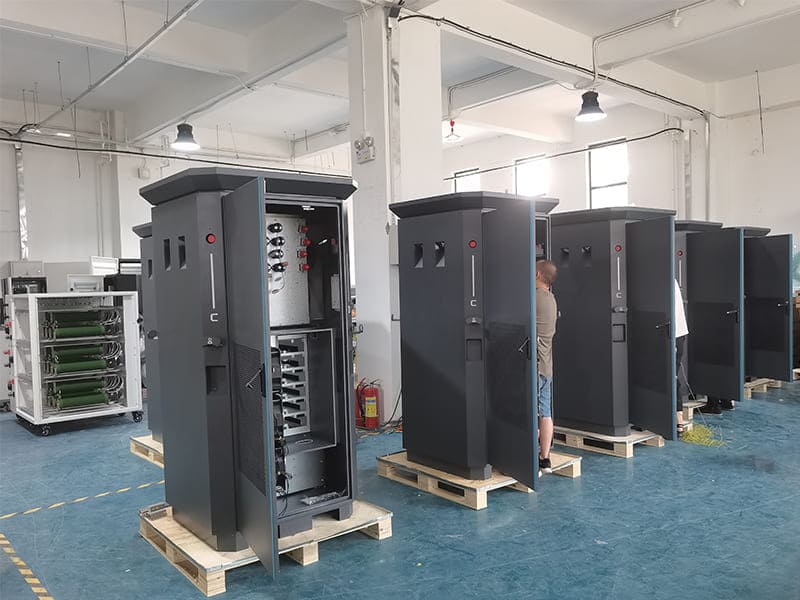
Residential Areas: AC chargers with Type 1 or Type 2 plugs are ideal for overnight charging.
Fleet Yards: High-power DC units (60kW-320kW) keep taxis and logistics vehicles moving quickly.
Aegen manufactures EV charging stations for the Middle East, Europe, and the Americas. Our Electric Vehicle charging station pricing strategies are built on proven, customized hardware.
The Future of Dynamic Pricing
Technology is making pricing smarter. Modern software now recommends optimal rates based on grid costs and usage patterns . Therefore, EV charging station pricing is no longer static; it is dynamic.
In conclusion, your profit potential hinges on location analysis. EV charging station pricing must align with user behavior, local competition, and charger type. By partnering with an experienced manufacturer like Aegen, you gain the hardware and support needed to succeed. We offer free technical support and customization to ensure your investment pays off. Choose the right spot, pick the right charger, and watch your revenue grow.