
The rapid electrification of commercial fleets makes choosing the right Logistics centers EV charging station a critical business decision. Therefore, operators must understand the core technical specifications. Aegen, a leading manufacturer, provides solutions tailored for these demanding environments. This article outlines the key factors to consider.
Power Output and Charging Speed
First, consider the power requirements. Logistics centers EV charging station products must handle quick turnaround times. Consequently, DC fast EV charging station is essential for fleet vehicles.
For light-duty vans, 20kW to 40kW chargers are often sufficient. However, for heavy-duty trucks, you need more power. Options like 60kW-120kW, 120kW-240kW, and 60kW-320kW units are available. Aegen offers a full range of these commercial DC fast EV chargers.
Furthermore, high-traffic logistics hubs benefit from split-type charging stations. Specifically, 480kW, 720kW, and 960kW split units enable ultra-fast charging. They are ideal for depot charging where vehicles park briefly.
Connector Types and Compatibility
Next, compatibility is non-negotiable. A robust Logistics centers EV charging station must serve a mixed fleet. Therefore, look for multi-standard support.
Chargers should accommodate CCS2, CCS1, GB/T, CHAdeMO, and NACS plugs. This variety ensures all vehicle types can charge. Additionally, consider the number of plugs. Dual-gun, triple-gun, and quad-gun chargers allow simultaneous vehicle charging. This feature maximizes efficiency during shift changes.
Durability and Application Suitability
Logistics environments are tough. Consequently, equipment must be industrial-grade. A reliable Logistics centers EV charging station features a durable enclosure. It must withstand weather, vibration, and constant use.
These stations serve various applications. They are essential for:
High-traffic retail: Supermarkets and shopping centers.
Transport hubs: Airports, train stations, and highways.
Daily commuter spots: Office campuses, government buildings, and hotels.
Dedicated fleets: Logistics centers, taxi ranks, and bus depots.
Leisure venues: Restaurants, cinemas, and stadiums.
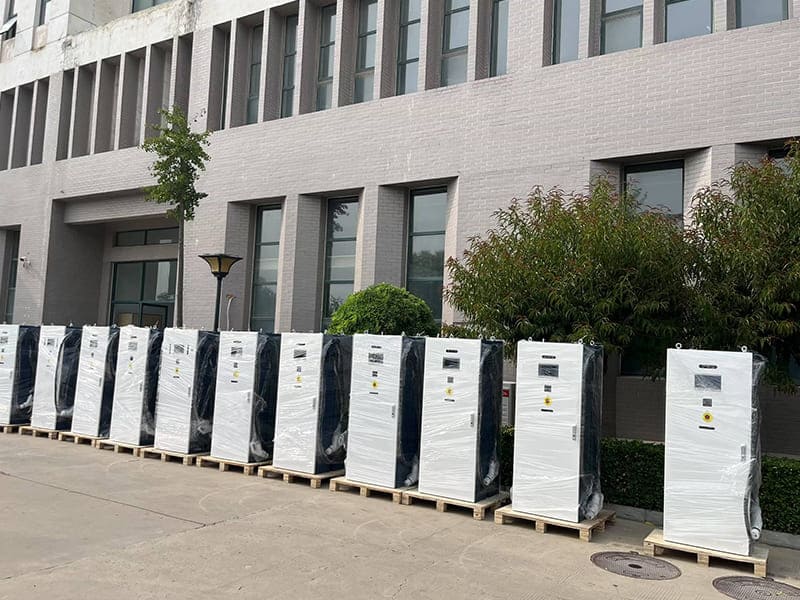
Aegen customizes solutions for all these locations, ensuring reliable performance.
Advanced Technology and Support
Moreover, modern chargers need smart features. They should support OCPP for remote management. This allows for monitoring, billing, and load balancing.
Aegen provides comprehensive support. They sell complete charging stations and complete sets of parts. Importantly, they offer free technical support and customization services. This ensures your Logistics centers EV charging station integrates seamlessly with existing operations. High ROI Office Buildings EV Charging Station: Low Cost, High Utilization, Steady Earnings.
They also supply EV charger testers. These tools are vital for installation companies and assemblers. They help maintain system uptime and safety.
Global Standards and Partnerships
Finally, consider the manufacturer’s reach. Aegen partners with dealers, installers, and assembly firms worldwide. Their products are deployed across Central Asia, the Middle East, Europe, and South America. This global experience ensures proven quality.
In conclusion, selecting the right equipment requires careful analysis. Focus on power scalability, connector flexibility, and robust support. By choosing Aegen, logistics operators invest in reliable, future-proof infrastructure that keeps their fleets moving efficiently.