
The familiar EV charging station Type 1 connector faces a pivotal moment in 2026. For over a decade, the SAE J1772, commonly called Type 1, served as the undisputed standard for AC charging across North America. However, the landscape has shifted dramatically. The rise of Tesla’s North American Charging Standard (NACS), now formalized as SAE J3400, has disrupted the market. Consequently, many major automakers have pledged allegiance to this new, more compact connector. This transition leaves current EV owners and businesses wondering about the fate of the existing infrastructure. At Aegen, we manufacture both AC and DC chargers for global markets. We closely monitor these shifts to support our partners effectively. Therefore, this article explores the current status of the J1772 connector. We will examine its legacy, the rise of NACS, and what this means for the future of charging.
The Legacy of the J1772 (Type 1) Connector
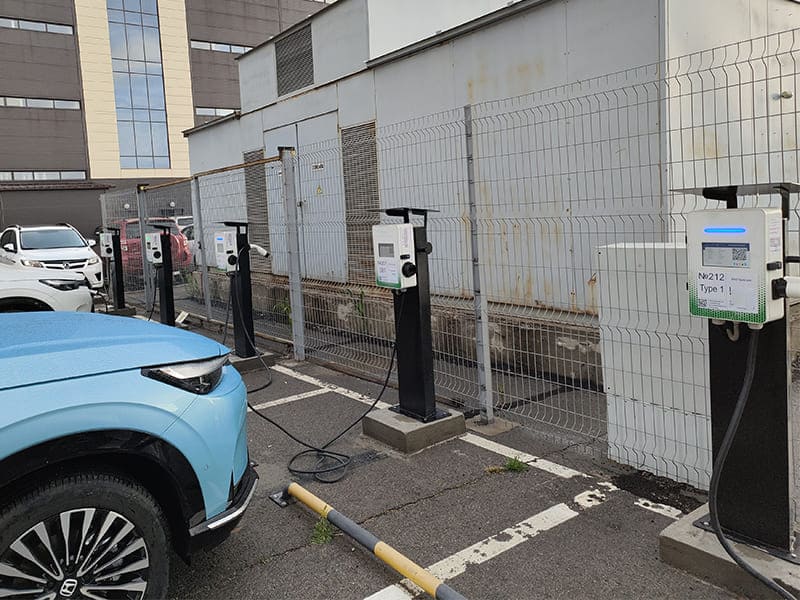
First, we must understand the role this connector has played. The EV charging station Type 1 plug was the pioneer for standardized charging. The SAE International developed the J1772 standard in the late 2000s . Its mission was to create a safe and universal method for AC charging. This five-pin connector became the go-to interface for every non-Tesla EV in North America. It was the backbone of Level 2 charging for models like the Nissan Leaf and Chevrolet Volt . For years, it was simply “the plug” you used at home, work, or public parking garages.
Aegen produces high-quality AC chargers compatible with this longstanding standard. Our AC business EV charger is available with Type 1 connectors. These 7kW, 11kW, and 22kw units are perfect for overnight charging. They feature both single-gun and dual-gun designs. We also offer a 7kW/11kW/22kw AC wallbox for home use. These can be installed in a garage or outside. They are ideal for residential complexes and corporate buildings . The reliability of the J1772 design has been proven over millions of charging sessions. It remains a trusted and cost-effective solution for compatible vehicles today. Is the EV charging station 20kw the best solution for my business?
The Rise of NACS: A New Challenger
Nevertheless, the industry does not stand still. Tesla developed its own connector, the NACS, in 2012 . It was smaller, lighter, and handled both AC and DC charging through a single port. For a long time, it was a proprietary system. However, Tesla opened its specification to the world in late 2022 . This act triggered a seismic shift. The SAE quickly moved to standardize it as J3400. Soon after, major automakers like Ford, GM, and Rivian announced plans to adopt the NACS port in their future vehicles.
This momentum has been undeniable. By 2026, NACS has become the native port for a wide range of new EVs sold in North America . The physical advantages are clear. The NACS connector is roughly half the size of the combined CCS1 combo. The CCS1 combo is the bulky extension of J1772 used for DC fast charging. The NACS design is simply more ergonomic and easier to handle . Furthermore, it natively supports advanced features like Plug & Charge and bidirectional power flow . Therefore, the industry has quickly coalesced around this new standard.
The Current Two-Standard Reality
So, where does this leave the EV charging station Type 1? It is not vanishing overnight. We are currently living in a transition period. For now, most non-Tesla EVs on the road still use a J1772 port for AC charging . They require a CCS1 combo port for DC fast charging . This means the vast majority of existing public Level 2 charging stations use the J1772 connector. These stations will remain operational for years to serve these vehicles.
At Aegen, we see this dual-standard reality in our daily operations. Our partners need flexibility. We provide DC EV charging stations with multiple plug types. These include CCS1, CCS2, GB/T, CHAdeMO, and NACS. We also ensure our AC chargers offer Type 1, Type 2, GB/T, and NACS options . This approach helps EV charger enterprises manage their inventory smartly. They can serve the legacy fleet while preparing for the new wave of NACS-equipped cars. Aegen provides free technical support to help partners navigate this complex transition. We also offer customization services for unique market requirements.
What This Means for Home and Commercial Users
For consumers, the connector question is simpler than it seems. If you own an older EV with a J1772 port, you should continue using a EV charging station Type 1 at home. It is the most direct and efficient method. Upgrading your car’s port is expensive and impractical . A dedicated Type 1 charger from Aegen provides safe and reliable power. It includes features like overcurrent protection and thermal monitoring .
If you are buying a new EV today, it may come with a NACS port. In that case, you will likely install a NACS-based home charger. However, adapters are a normal and safe part of EV ownership today . A Tesla owner can use a simple adapter to charge on a J1772 public station . Similarly, new NACS vehicles will likely use adapters to access the existing CCS fast-charging networks. The most important step is installing proper electrical capacity at home . The electrical work matters more than trying to predict the final connector winner.
For commercial hosts, the strategy should be balanced. Ignoring the existing J1772 fleet would alienate many current EV drivers. The EV charging station Type 1 is still the dominant AC connector in use today. However, installing NACS connectors or offering dual-head stations is a smart future-proofing move. This ensures your location remains accessible to all EVs, old and new.
Aegen’s Perspective on the Evolving Market
From our vantage point at Aegen, this evolution is a natural part of a maturing industry. We have supplied charging solutions to Central Asia, the Middle East, Europe, and South America . We have seen different regions coalesce around various standards. Europe standardized on Type 2. China advanced with GB/T. North America is now unifying around NACS/J3400. This convergence is ultimately good for the industry. It simplifies manufacturing and improves the user experience.
Our commitment remains the same regardless of the connector type. We provide high-quality, durable, and efficient charging stations. We partner with EV charger dealers, assembly companies, and installation firms globally. Our product portfolio is designed to meet the diverse needs of this transition. We offer everything from portable home chargers to powerful DC fast EV charging station for home. Our team provides the technical support needed to make informed decisions. We help our partners choose the right equipment for their specific market.
Conclusion: A Standard in Transition, Not Obsolete
In conclusion, is the EV charging station Type 1 still the standard for North America? The answer is nuanced. It remains the de facto standard for AC charging among the existing fleet of non-Tesla EVs. It will continue to serve this vital role for many years. Millions of vehicles on the road today depend on it. The infrastructure investment in J1772 is massive and will not disappear quickly. For owners of these vehicles, a dedicated Type 1 charger from a trusted manufacturer like Aegen is still the best solution.
However, the future standard is clearly NACS. The industry has aligned behind Tesla’s connector design. New vehicles are adopting it, and charging networks are integrating it. Therefore, the J1772 is a legacy standard in transition. It is the reliable workhorse of the present, gracefully handing over the reins to the new unified standard of the future. At Aegen, we are here to support our partners through every phase of this transition. We provide the products, support, and expertise needed to thrive in this dynamic market. Whether you need a commercial AC EV charger with a Type 1 plug or a DC fast charger with NACS, we have the solution.