
Aegen knows your struggle. Choosing an EV charging station 1 phase or three-phase matters. An EV charging station 1 phase fits many home garages well. An Electric Vehicle charging station 1 phase usually delivers up to 7kW of power. However, a three-phase unit can reach 11kW or 22kW. Therefore, your decision depends on your daily driving needs.
Understanding Your Charging Scenarios
Aegen sees three main use cases for AC chargers. First, commercial AC EV chargers work in garages, residential public parking, and corporate fleets. These locations allow long or overnight charging. Plug types include Type 1, Type 2, GB/T, and NACS. You can choose dual-gun or single-gun models. Power options are 7kW, 11kW, or 22kW. For a slow overnight charge, an EV charger station 1 phase at 7kW often suffices.
Second, Aegen offers wall-mounted home chargers. These include 7kW, 11kW, and 22kW versions. Charging time remains longer compared to DC fast chargers. An EV charging station 1 phase works on single-phase electricity. Meanwhile, a three-phase unit requires a different grid connection. Thus, you must customize based on your local supply.
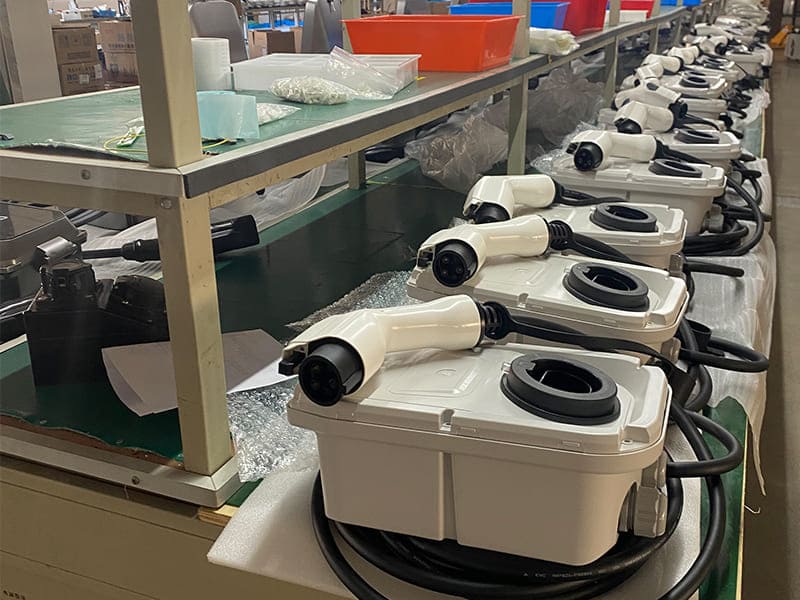
Third, portable EV chargers provide unmatched convenience. Aegen produces 3.5kW, 7kW, and 11kW portable units. Keep one in your trunk for emergencies. The biggest advantage is easy carrying. Nevertheless, the main drawback is slow charging. An Electric Vehicle charging station 1 phase portable model at 3.5kW suits overnight use at a friend’s house. For faster travel, you might prefer a three-phase portable unit at 11kW.
Why Choose an EV Charging Station 1 Phase?
Many households have single-phase power already. An Electric Vehicle charging station 1 phase costs less to install. You avoid upgrading your electrical panel. Consequently, an EV charging station 1 phase is budget-friendly. Aegen recommends it for drivers under 50 km daily. Also, it works perfectly for plug-in hybrids. Remember that an Electric Vehicle charging station 1 phase charges at about 7-8 km per hour. That means 70 km in ten hours. Is that enough for you? If yes, save your money.
But when should you pick three-phase? A three-phase charger delivers three times more power. It cuts charging time drastically. For example, an 11kW unit adds 30-40 km per hour. A 22kW unit doubles that. So, EV charger station 1 phase cannot match this speed. However, not every home has three-phase wiring. Adding it costs thousands. Therefore, weigh your urgency against installation expenses.
Aegen’s Customization and Global Reach
Aegen manufactures complete charging stations and components. We provide free technical support. Moreover, we offer full customization services. Voltage requirements vary by country. Aegen adapts to local standards easily. For instance, an EV charging station 1 phase for Europe uses 230V. For the US, it uses 240V. For Japan, 200V. So, always specify your region.
We cooperate with many EV charger dealers, assembly companies, and installation firms. Aegen’s products now serve Central Asia, the Middle East, Europe, and South America. Customers highly approve our reliability. An Electric Vehicle charging station 1 phase from Aegen endures harsh weather. Additionally, our three-phase models include smart load balancing. Thus, you avoid tripping breakers.
Lead Time and Order Process
Production typically takes 7 to 22 working days. The exact schedule depends on order backlog. Aegen treats urgent requests individually. For a standard EV charging station 1 phase, expect around 10 days. For a customized three-phase unit, allow up to 22 days. Contact our sales team for a precise quote. EV charging station 3.5 kw: What are the best features of Aegen model?
Final Recommendation from Aegen
Choose an Electric Vehicle charging station 1 phase if you have single-phase power, drive less than 50 km daily, or want the lowest cost. An EV charger station 1 phase excels in apartments with limited capacity. Also, it works well for rental properties where you cannot modify wiring. On the other hand, pick three-phase for long commutes, multiple EVs, or future-proofing. An EV charging station 1 phase will never charge as fast as 22kW. So, be honest about your lifestyle.
Aegen advises testing your daily mileage. Track it for one week. Then, decide. Still unsure? Email Aegen’s support team. We help you compare an EV charging station 1 phase versus three-phase side by side. Finally, remember that a slow charger used daily beats a fast charger unused. Make your choice smartly.