
Aegen often hears one key question from users. Which option works best: a portable or a wall-mounted EV charging station 16A? This choice affects daily convenience and long-term satisfaction. An EV charging station 16A provides steady power for many electric cars. For homes and workplaces, an AC EV charging station balances speed and safety. Aegen manufactures both types with global standards in mind.
Understanding the 16A Option
Why focus on an Electric Vehicle charging station 16A? This current level suits overnight charging well. It avoids overloading typical household circuits. Many drivers find an EV charging station 16A reliable for regular use. Aegen designs these units for various plug types. These include Type 1, Type 2, GB/T, and NACS. Consequently, compatibility becomes simple for most car owners.
Wall-Mounted Units: Fixed but Powerful
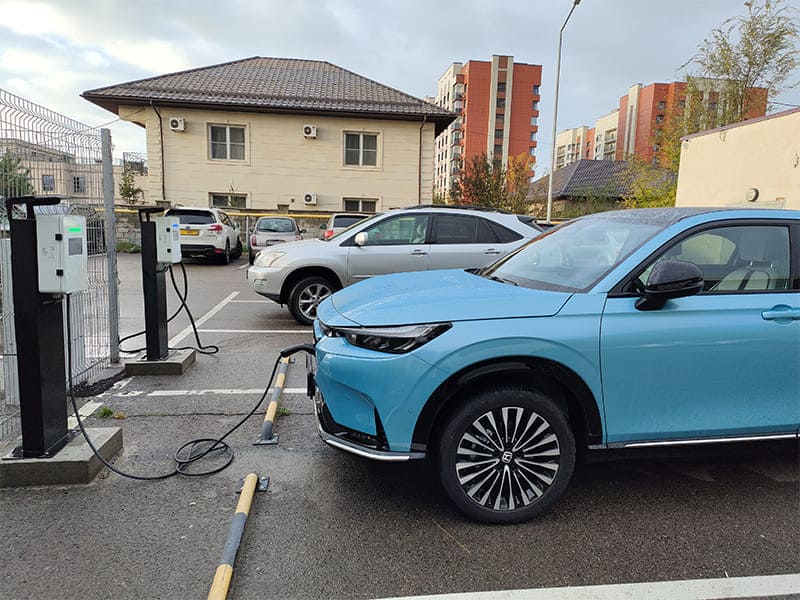
A wall-mounted EV charger station offers strong stability. You install it once in a garage or shared parking area. Consequently, it stays protected from weather or theft. Aegen produces commercial AC EV chargers for such spots. These work in residential garages, public parking lots, and company zones. They support long or night-time charging sessions. Moreover, wall-mounted models come in dual-gun and single-gun versions. Power ratings include 7kW, 11kW, and 22kW. A 7kW or 11kW EV charging station 16A fits most home needs. A 22kW version serves fleets or multi-tenant buildings. Installation requires single-phase or three-phase electricity. Therefore, Aegen customizes each order based on local grids. Delivery takes 7 to 22 working days. This depends on production schedules and order volume.
Portable Chargers: Light and Flexible
A 16A portable EV charger station provides unmatched mobility. You keep it in your car trunk. Then you use it at any standard outlet. Aegen produces portable EV chargers with 3.5kW, 7kW, and 11kW ratings. However, a portable EV charging station 16A charges slower than wall-mounted types. Specifically, 3.5kW suits very long overnight stops. A 7kW portable unit works faster but still lags behind fixed 22kW systems. Nevertheless, portability remains the main advantage. You can travel across countries without searching for public chargers. A portable EV charging station 16A also helps at rental homes or remote sites. Yet remember its biggest drawback: slow charging speed. Plan for many hours of connection time.
Making the Right Choice
How do you decide between these two styles? First, consider your parking situation. Do you have a private garage? Then a wall-mounted Electric Vehicle charging station 16A saves effort. You do not pack and unpack cables daily. Second, think about travel habits. Do you often visit family or cabins far from fast chargers? A portable EV charger station 16A gives peace of mind. Third, evaluate your electrical capacity. Aegen offers free technical support for this step. Their team checks voltage standards for any country. For Europe, 230V single-phase works for 7kW. For the Middle East or South America, Aegen adapts to local grids. This flexibility ensures safe operation.
Aegen’s Full Service Package
Aegen does more than sell chargers. They provide complete charging station solutions and components. Their partners include EV charger distributors, assembly firms, and installation companies. As a result, Aegen’s EV charging station 16A units now operate across Central Asia, the Middle East, Europe, and South America. Customers highly approve of their reliability. Additionally, Aegen offers custom design services. Need a specific color, cable length, or authentication system? Aegen delivers. Lead times average 7 to 22 working days. However, urgent orders receive special handling.
Real-World Usage Examples
Consider a residential community in Poland. They installed 20 wall-mounted EV charger station 16A units. Each unit has Type 2 plugs and 11kW power. Residents now charge overnight without moving cables. Meanwhile, a sales representative in Brazil keeps a portable EV charger in his car. He visits three cities weekly. At hotels, he plugs into exterior outlets. Thus, he never fears a dead battery. Both scenarios show valid uses. The wall-mounted type excels in fixed locations. The portable type shines for unpredictable trips. Avoid Low-Profit Zones: Strategic Site Selection for Your EV Charging Station 60kw.
Final Verdict from Aegen
No single answer fits every driver. A wall-mounted EV charger station is better for homes with dedicated parking. It charges faster, stays secure, and requires no setup each evening. A portable EV charging station 16A is better for renters, travelers, or multiple-car families. You share one unit among several vehicles. Most importantly, Aegen reminds you to check your daily range needs. Do you drive under 80 km per day? Then a 16A charger of either type works fine. Do you drive over 150 km daily? Then consider a 22kW wall-mounted model. Finally, Aegen recommends ordering a small number of portable units for backup. Keep them in emergency kits. This way, you always have a working EV charging station 16A at hand. For bulk orders, custom branding, or technical drawings, contact Aegen directly. Their support team answers within one business day. Choose wisely, and your electric car stays ready for every journey.