
Aegen sees a clear trend. The Poland EV charging station market now demands speed. Drivers want shorter stops. Network operators seek higher turnover. This shift favors ultra-fast DC units.
Growing Demand for Ultra-Fast Charging
Firstly, long routes need quick energy top-ups. Secondly, urban fleets require rapid turnaround. Therefore, many providers upgrade their hardware. Consequently, the Poland EV charging station market prioritizes power above 150kW. Yet, older AC posts remain common. Nevertheless, new tenders increasingly specify DC.
Aegen offers multiple ultra-fast models. For instance, Aegen produces 20kW, 40kW, 60kW, 80kW, 120kW, 160kW, 240kW, and 320kW DC fast EV chargers. Moreover, Aegen supplies 480kW, 720kW, and 960kW split-type charging stations. These units support two, three, or four guns simultaneously. Additionally, Aegen provides various plug options: CCS2, CCS1, GB/T, CHAdeMO, and NACS. Clients select according to their vehicle mix. As an installer, why choose Aegen EV Car charging station for commercial projects?
Why Poland Embraces High-Power DC
Poland’s geography encourages long-distance travel. Therefore, highway corridors need fast charging. In response, the Poland EV charging station market adds more ultra-DC sites. For example, major routes from Warsaw to Berlin or Krakow to Prague now see 300kW+ units. Furthermore, government incentives favor high-power stations. As a result, operators replace older 60kW posts.
Aegen notes another driver: battery sizes grow. Modern EVs often accept 200kW or more. Hence, a 60kW charger feels slow. The Poland Electric Vehicle charging station market adapts by deploying 240kW or 320kW shared units. Aegen’s 320kW model can charge two cars at 160kW each. Alternatively, one car gets full 320kW. This flexibility satisfies both fleet and retail customers.
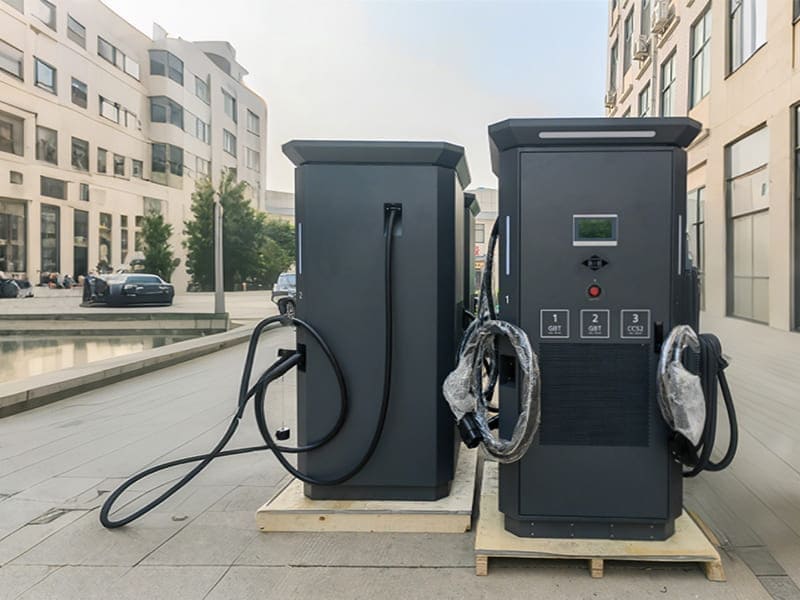
Split-Type Stations for High Throughput
For bus depots and truck stops, Aegen recommends split-type charging. The 480kW, 720kW, and 960kW systems separate power cabinets from dispensers. Consequently, one cabinet serves multiple bays. This design reduces cable losses. Also, it lowers installation costs. Accordingly, the Poland EV charging station market shows rising interest in split-type DC.
Aegen observes that three-gun and four-gun stations work well for logistics hubs. For instance, a 960kW unit with four CCS2 guns can charge four trucks simultaneously at 240kW each. Meanwhile, a two-gun 160kW unit fits smaller retail sites. Therefore, Aegen advises matching power and gun count to actual usage patterns.
Plug Compatibility Matters
Poland hosts various EV brands. Some use CCS2 as standard. However, older Japanese models need CHAdeMO. Chinese imports may require GB/T. American vehicles sometimes have NACS. Hence, the Poland Electric Vehicle charging station market must offer multi-standard plugs. Aegen solves this by letting customers choose any combination of CCS2, CCS1, GB/T, CHAdeMO, and NACS on each gun.
For example, a triple-gun Aegen 240kW station can have CCS2, CHAdeMO, and GB/T. That setup serves all passing EVs. Thus, operators avoid excluding any driver. Aegen believes this flexibility accelerates ultra-fast DC adoption.
Policy and Grid Considerations
Poland’s government supports EV growth via the My Electrician program. Nevertheless, grid capacity limits some sites. To solve this, the Poland Electric Vehicle charging station market increasingly uses battery-buffered ultra-fast DC units. Aegen’s split-type stations can integrate storage. Consequently, peak demand drops. Thus, more locations become feasible.
Also, Aegen notes that permitting remains a challenge. However, municipalities welcome ultra-fast DC. Why? Because they attract EV tourism. As a result, the Poland EV charging station market sees partnerships between retailers and charge point operators. Shops, hotels, and restaurants now host Aegen’s 160kW and 320kW dual-gun units.
Future Outlook
Aegen predicts that by 2027, over 60% of new Poland Electric Vehicle charging station units will be 120kW or higher. Today, that figure sits near 35%. Therefore, rapid growth lies ahead. Meanwhile, AC posts will serve overnight parking. For on-the-go charging, ultra-fast DC dominates.
Consequently, Aegen expands local support. The company stocks spare plugs and cables. Also, Aegen trains Polish technicians. Hence, maintenance times shrink. Aegen believes this service network strengthens the Poland EV charging station market.
Conclusion
In summary, the Poland EV charging station market is indeed shifting toward ultra-fast DC units. Drivers demand speed. Operators want higher utilization. Aegen provides the hardware: 20kW to 960kW DC EV fast charging stations with two, three, or four guns and five plug options. Specifically, Aegen’s 480kW–960kW split-type stations enable high-throughput corridors. For retail and fleet sites, 160kW–320kW units offer balance. Thus, Aegen positions itself as a key partner in Poland’s fast-charging future.