
Local governments increasingly view the EV charging station for government agencies as a revenue tool. Strategic placement transforms underused public land into profit centers. Parks and libraries offer ideal locations for this infrastructure. This approach combines public service with financial sustainability. The shift responds to rising electric vehicle adoption rates nationwide.
The Core Strategy
Installing an EV charging station for government agencies at parks captures weekend and holiday traffic. Families visit parks for recreation and stay longer when charging available. Libraries attract daily visitors who study, read, or attend events. These destinations naturally generate dwell times of one to three hours. Longer visits directly increase charging session revenue. Therefore, each location becomes a dependable income stream.
Revenue Mechanics Explained
Most government-operated chargers use time-based or energy-based pricing models. Therefore, a typical session yields five to fifteen dollars per vehicle. High-traffic parks can see twenty or more daily charges. Consequently, annual revenue per dual-port station often exceeds twenty thousand dollars. Moreover, operating costs remain low because electricity is purchased at commercial rates. Thus, the EV charging station for government agencies produces net positive cash flow within two years. Additionally, federal and state grants often cover initial hardware and installation expenses.
Synergy with Public Amenities
Charging drivers frequently enter the library or use park facilities while waiting. This behavior increases patronage of on-site vending machines, restrooms, and event spaces. Subsequently, ancillary revenue grows without extra marketing effort. Furthermore, satisfied visitors return more often, building habitual usage. Therefore, the Electric Vehicle charging station for government agencies becomes a community anchor rather than a mere utility. Parks with playgrounds see especially high utilization during summer months. Libraries with extended evening hours capture commuter charging after work.
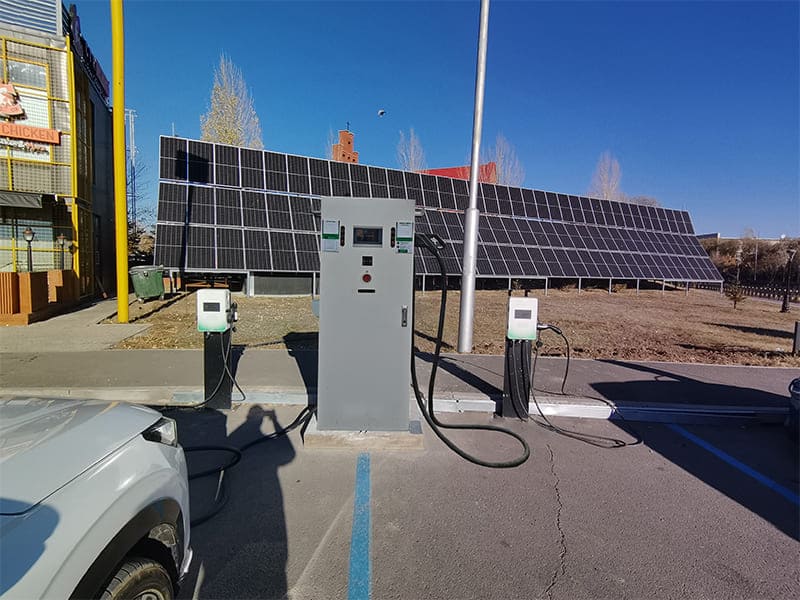
Smart Technology Boosts Efficiency
Modern chargers support ISO 15118 standard protocols for plug-and-charge functionality. This feature eliminates RFID cards or phone apps for registered users. Consequently, session start time reduces from minutes to seconds. Smart charging adjusts power output based on grid load and time-of-use rates. Hence, the EV charging station for government agencies can lower electricity costs by shifting demand to off-peak hours. Real-time data dashboards allow managers to monitor usage patterns daily. Moreover, remote diagnostics reduce maintenance downtime significantly.
Marketing and Visibility Benefits
Signage at each location advertises the EV charging station for government agencies as a free-parking perk. Many municipalities promote these sites through their official apps and newsletters. Positive word-of-mouth spreads among EV owner communities rapidly. Consequently, out-of-town travelers deliberately route through these towns for convenient charging. This influx brings additional spending at nearby cafes and shops. Therefore, the economic impact extends well beyond charging fees.
Financial Performance Data
Pilot programs in midsize cities show average monthly earnings of two thousand dollars per station. Annual maintenance costs typically stay under five hundred dollars. Hence, net profit margins reach seventy percent or higher. When scaling to five or more locations, the EV charging station for government agencies generates six-figure annual revenue. These funds can offset library operating budgets or park maintenance expenses. Furthermore, performance improves with each software update.
Overcoming Common Objections
Some officials worry about parking congestion from charging vehicles. However, designated spots with time limits prevent overstay. Others cite upfront costs as prohibitive. Nevertheless, leasing agreements with charging networks reduce capital outlay. Additionally, utility companies offer demand-response incentives for public EV charging stations. Therefore, the Electric Vehicle charging station for government agencies remains financially viable even for small towns. Is Kuala Lumpur EV charging station availability improving in 2027?
Future Expansion Opportunities
As bidirectional charging emerges, government fleets can use these stations for vehicle-to-grid services. This capability turns the EV charging station for government agencies into a grid asset during peak demand. Libraries with rooftop solar can pair with storage batteries for zero-emission charging. Parks with large lots can add multiple units without aesthetic harm. Accordingly, early adopters position themselves for upcoming technology upgrades.
Conclusion
Strategic placement at parks and libraries maximizes both usage and earnings. The EV charging station for government agencies fulfills sustainability goals while producing measurable revenue. Low operating costs, smart protocols, and community goodwill drive success. Therefore, municipalities should prioritize these high-dwell-time locations immediately. With proper planning, each station pays for itself and then generates surplus. This model represents a win-win for public budgets and electric drivers alike.