
The United Arab Emirates has set clear and ambitious targets for electric vehicle adoption. A Dubai EV charging station is central to this transformative vision. The government aims for EVs to constitute 10 percent of all vehicles by 2030. This goal also includes 30 percent of public sector vehicles being electric or hybrid.
The Broader 2030 Vision for Green Mobility
This 2030 goal is a critical milestone in a longer journey. It directly supports the National Electric Vehicles Policy, which targets a 50 percent EV share by 2050. The Dubai Green Mobility Strategy 2030 provides the local framework for this effort. It seeks to reduce carbon emissions from the transportation sector significantly.
Furthermore, this target aligns with the UAE’s Net Zero by 2050 Strategic Initiative. A Dubai EV charging station network is the backbone of this entire strategy. These stations make the daily use of EVs practical for everyone.
Infrastructure Expansion to Meet the Target
Meeting the 2030 target requires a massive expansion of charging facilities. Therefore, Dubai Electricity and Water Authority (DEWA) has been aggressively building out its network. DEWA plans to install 1,000 public charging stations by 2025. This ambitious target has nearly been achieved already.
More recently, Dubai Municipality launched a Dhs150 million initiative. This project will install ultra-fast charging stations in 600 parking spaces. A Dubai EV charging station will soon be a common sight in parks and beaches. Consequently, convenient charging will become increasingly accessible to all residents.
The Impact of Smart Charging Technology
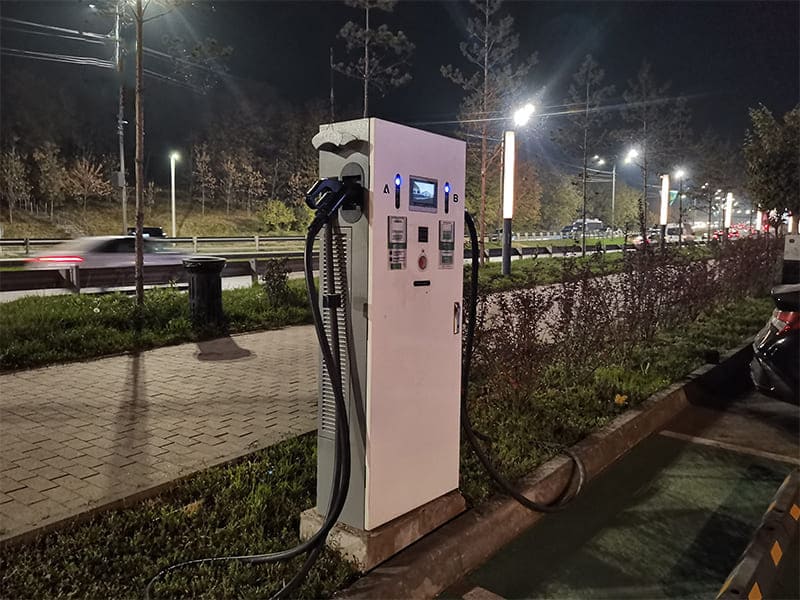
The infrastructure is not just about quantity; it is also about quality. Smart EV fast charging station technologies are being integrated to enhance user experience. Specifically, the industry is adopting the ISO 15118 standard for Plug & Charge. This standard allows for automatic authentication and billing when you connect your car.
Thus, using a Dubai EV charging station will become seamless and effortless. This removes a major barrier for potential EV buyers. Additionally, this technology enables intelligent charging and Vehicle-to-Grid communication. This helps balance grid loads and integrate renewable energy sources.
Public and Private Sector Collaboration
Achieving the 2030 target requires strong collaboration. The government is working closely with private companies to build infrastructure. For instance, ADNOC Distribution plans to open 20 EV charging hubs on motorways by 2027. These hubs will feature high-speed chargers, reducing charging time significantly. This public-private partnership is essential for widespread adoption. EV Charging Station for Government Agencies – How Strategic Placement at Parks & Libraries Boosts Earnings.
Commercial Fleets and Future Growth
The 2030 target also includes a major push for commercial fleet electrification. The Road2.0 initiative has signatories pledging to electrify 30% of their fleets by 2030. They plan to deploy 6,000 commercial EVs by this time. A robust Dubai EV charging station network is critical for these fleets. Therefore, strategic planning for depot and public charging is underway. In conclusion, the UAE’s 2030 target of 10% EV penetration is supported by extensive investment. A modern Dubai EV charging station is the key enabler for this sustainable future.