
Selecting the right technology for a fleet EV charging station is a critical business decision. It impacts operational costs, vehicle uptime, and scalability. As a manufacturer in this industry, I have analyzed both options extensively. My goal is to help you choose wisely for your specific needs.
Understanding the Core Technologies
First, we must distinguish between AC and DC charging. AC stands for Alternating Current. DC stands for Direct Current. The difference lies in where the conversion from grid power to battery power happens.
AC chargers are simpler and less expensive. They rely on the vehicle’s onboard charger to convert power. This process is slower. Consequently, AC is ideal for overnight depot charging. However, it may not suit vehicles in constant rotation.
Conversely, DC fast EV chargers have the converter inside the station. They supply power directly to the battery. This bypasses the vehicle’s limited onboard system. Therefore, DC charging is significantly faster.
The Case for AC in a Fleet EV Charging Station
For many operations, AC remains a highly practical solution. It is cost-effective to install multiple AC units. A fleet EV charging station utilizing AC can handle many vehicles overnight. This works well for predictable, scheduled routes.
Moreover, AC infrastructure is less complex. It puts less strain on the grid during peak times. Installation timelines are typically shorter. However, you must consider your duty cycle carefully.
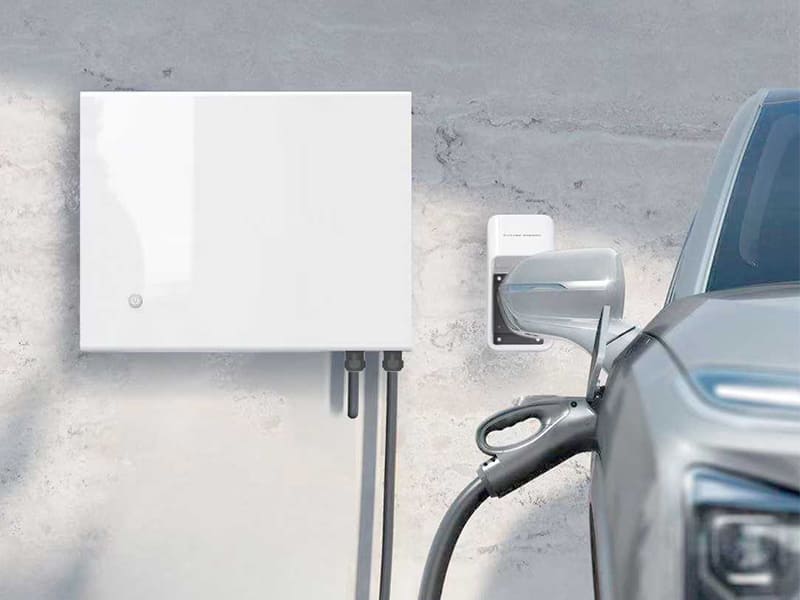
The Advantages of DC Fast Charging
For high-intensity operations, DC is often the superior choice. A fleet Electric Vehicle charging station equipped with DC fast chargers enables rapid turnaround. Vehicles can be charged during lunch breaks or between shifts.
This technology supports opportunity charging. It maximizes vehicle utilization throughout the day. A fleet EV charging station using DC power can serve more vehicles per day. It future-proofs your operations against larger battery capacities.
Nevertheless, DC solutions demand higher upfront investment. They require significant grid connections. Despite this, the speed and flexibility are unmatched for busy fleets.
A Hybrid Approach: The Best of Both Worlds
Interestingly, many modern depots adopt a mixed strategy. They install AC for overnight charging. Simultaneously, they deploy DC for top-ups during the day. This balances cost and operational flexibility.
A well-designed fleet Electric Vehicle charging station should incorporate both. It accommodates vehicles with different dwell times. It also provides redundancy. If one system fails, the other can provide support.
The Role of Aegen New Energy in Your Decision
Here at Aegen New Energy, we understand these challenges intimately. We are a dedicated Chinese electric vehicle charger manufacturer. Our portfolio includes both AC and DC solutions. We serve homes and commercial operations globally.
We do not just sell hardware; we provide expertise. A fleet EV charging station requires careful planning. Our team offers free technical support and customization services. We help you navigate the AC versus DC decision.
We collaborate with dealers and installation companies worldwide. Additionally, we partner with EV charging station assemblers. We supply both individual parts and complete component kits.
Our products have earned trust across diverse markets. Our DC fast chargers are robust and reliable. Our AC chargers are perfect for home and commercial use. We also offer portable chargers for ultimate flexibility.
Currently, our technology powers fleets in Central Asia. It supports operations in the Middle East and Europe. It is also gaining traction in South America. Customer feedback consistently highlights our quality and support.
Ultimately, the best technology depends on your fleet. A fleet EV charging station for last-mile delivery vans differs from one for buses. You must analyze your routes, dwell times, and energy needs. Why Your Lot is a Goldmine: Turning an Auto Dealership EV charging station into a Revenue Hub?
I always recommend starting with a thorough site assessment. Consider your current fleet size and future growth. A fleet EV charging station is a long-term asset. Therefore, making the right choice today prevents costly upgrades tomorrow.
In conclusion, there is no single universal answer. AC offers economy and simplicity. DC provides speed and maximum uptime. The right fleet EV charging station likely leverages both technologies. At Aegen, we are ready to help you build that perfect solution.