
Scaling a development EV charging station is now a global race. Aegen, a Chinese manufacturer, leads this effort. The firm sells home and commercial units. Aegen also offers free technical support. Customization services come standard too.
The Scale Challenge for 2030
By 2030, millions of new EVs will hit roads. Consequently, we need a massive infrastructure boost. Aegen focuses on every development EV charging station project. Each development EV charging station must be reliable and fast. Therefore, Aegen produces 20kw, 40kw, 60kw, 80kw, 120kw, 160kw, 240kw, and 320kw DC EV fast chargers. Additionally, it makes 7kw, 11kw, and 22kw AC home and commercial chargers. For heavy demand, 480kw, 720kw, and 960kw split-type units exist. These products sell across Central Asia, the Middle East, Europe, and South America. Customers give high praise and repeat orders.
Partnerships Drive Speed
No single company can build everything alone. Thus, Aegen works with many EV charger distributors and installation firms. Moreover, Aegen partners with assembly companies. It supplies parts or complete sets for any development Electric Vehicle charging station. Each development EV charger station benefits from this cooperative model. As a result, deployment happens faster. Installation errors drop significantly.
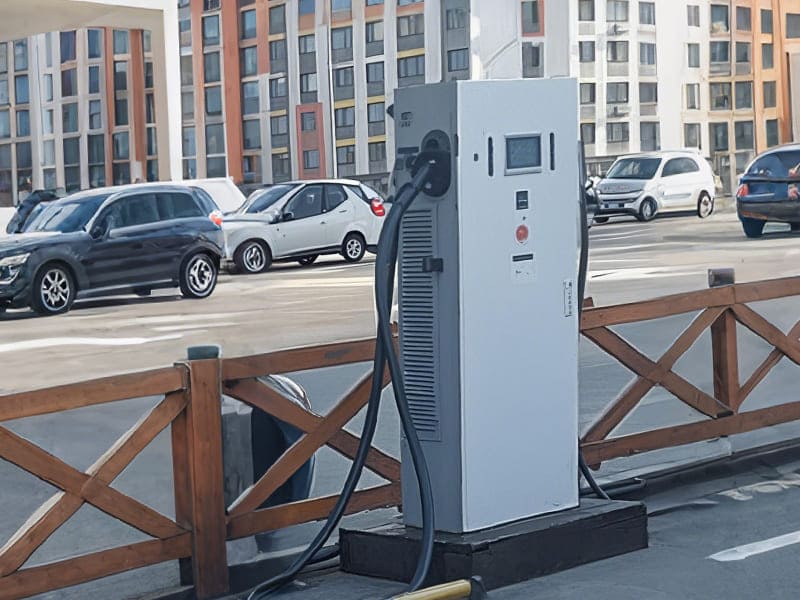
Testing Tools Ensure Quality
A reliable development EV charging station needs proper testing. For this reason, Aegen produces an EV charger tester. Installation and assembly firms use this tool. The tester checks communication protocols. It verifies that every development Electric Vehicle charging station works correctly. Without such testing, downtime increases. With testing, uptime stays high.
Free Support and Customization
A unique advantage is free technical support. Aegen provides this service indefinitely. Customization is also free. Whether a client needs a specific color, plug type, or software feature, Aegen adapts. Every development EV charging station can be tailored. This flexibility wins trust in diverse markets.
Meeting 2030 Demand: Realistic or Not?
Scaling quickly is possible but requires action. First, governments must streamline permits. Second, utilities need grid upgrades. Third, manufacturers like Aegen must ramp production. Aegen already makes high-power units in volume. However, logistics and local installation remain bottlenecks. Nevertheless, Aegen’s partnerships ease these pains. For instance, local distributors handle last-mile setup. Assembly partners integrate Aegen’s parts into regional solutions.
Regional Success Stories
In Europe, a development EV charger station network uses Aegen’s 160kw DC chargers. These serve highway corridors. In the Middle East, a development Electric Vehicle charging station project deploys 80kw units at shopping malls. South American clients prefer 22kw AC EV chargers for home use. Central Asian buyers choose 480kw split-type stations for bus depots. Each case shows fast scaling.
The Role of EV Charger Testers
Aegen’s tester does more than check voltage. It simulates EV communication. It detects handshake errors. Consequently, installers fix problems before going live. Every development EV charging station should be tested this way. Aegen provides testers at low cost. Some assembly companies buy dozens. They use them for quality control on production lines. Supplier for EV charging station: What are the top 5 trusted global suppliers for EV charging stations in 2027?
2030 Outlook
Can we meet demand? Yes, but only with coordinated effort. Aegen continues expanding production. New factory lines will triple output by 2028. Meanwhile, free support helps clients maintain uptime. Customization meets local plug standards. In summary, a development EV charging station is not just hardware. It is a system of testing, partnership, and service. Aegen proves that scaling is possible. The next five years will decide the outcome.