
The modern airport faces a new logistical challenge. Electric vehicles now arrive in growing numbers. An EV charging station for Airports is no longer a luxury but an operational necessity. Rapid charging cycles from 120kW to 320kW are transforming this infrastructure. They directly influence passenger movement and retail revenue. This article explores that powerful connection.
The Pain Point of Dwell Time
Airport managers worry about parking lot turnover. Traditional slow chargers keep EVs plugged for hours. This practice blocks spaces and frustrates drivers. A slow EV charging station for Airports creates bottlenecks at peak travel times. Passengers miss flights while waiting for a charge. Retailers lose foot traffic from those stranded vehicles. Consequently, dwell time becomes a hidden cost centre.
Rapid Charging as a Flow Solution
High-power chargers change this equation dramatically. A 120kW unit adds 100 kilometres of range in ten minutes. A 320kW charger does this in under five minutes. Therefore, a single EV charging station for Airports can serve six cars per hour at 120kW. That same station handles fifteen cars per hour at 320kW. This throughput reduces queue lengths significantly. Moreover, faster cycles empty parking bays more quickly. More available bays attract more paying customers daily.
Improving Passenger Experience
Time-sensitive travellers value speed above all else. A rapid Electric Vehicle charging station for Airports gives them confidence before a flight. They plug in, walk to check-in, and return to a fully charged car. This seamless process eliminates range anxiety entirely. Consequently, passengers arrive earlier and more relaxed. They browse shops and dine without rushing. Therefore, customer satisfaction scores rise alongside charging power.
Boosting Non-Aeronautical Revenue
Airports earn nearly half their income from retail and parking. A fast EV charging station for Airports directly supports this revenue stream. Shorter charge times do not reduce dwell time; they optimise it. Drivers now have 15 to 20 minutes of productive waiting. They use this window for coffee, snacks, or last-minute gifts. Retailers report higher basket sizes during these focused intervals. Meanwhile, parking fees per bay increase due to higher turnover. Profit margins expand without expanding physical space.
Smart Charging and ISO 15118
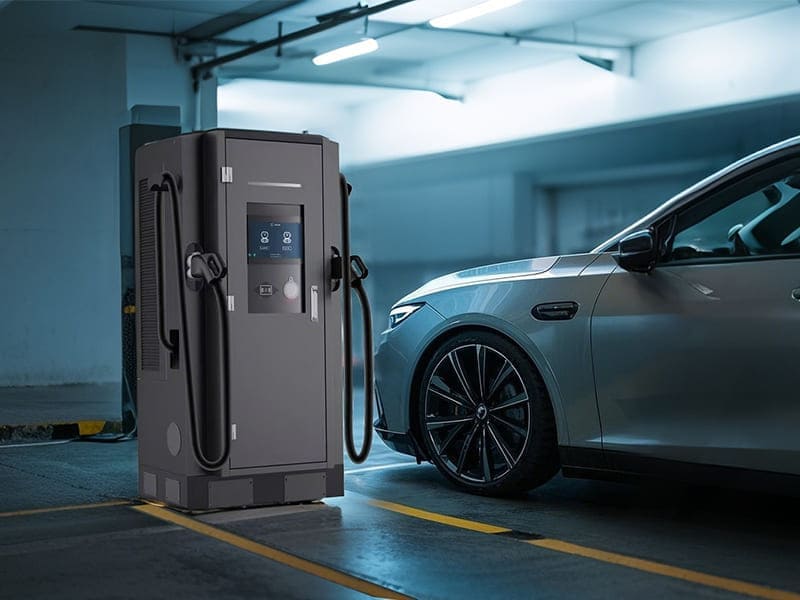
Modern systems integrate intelligent communication protocols. ISO 15118 enables plug-and-charge functionality for every session. The vehicle authenticates automatically with the charging network. This eliminates the need for cards or mobile apps. Consequently, a smart EV charging station for Airports reduces support calls and billing errors. It also manages load across multiple dispensers. Peak demand charges decrease through dynamic power sharing. Therefore, operational costs drop while reliability improves.
Data-Driven Operations
Each rapid charger generates real-time usage data. Airport operators monitor occupancy and energy consumption constantly. They predict busy periods and adjust pricing accordingly. A connected EV charging station for Airports can pre-cool batteries during off-peak hours. This strategy lowers electricity costs per kilowatt-hour. Additionally, data reveals popular travel corridors for route planning. Managers use this insight to place future chargers optimally. Hence, every investment becomes more targeted and profitable.
Fleet and Rideshare Opportunities
Airports host thousands of taxi and rideshare EVs daily. These drivers cannot afford long charging breaks. A high-power Electric Vehicle charging station for Airports becomes their preferred depot. They charge during passenger drop-off and pickup loops. This service creates a new B2B revenue channel. Airlines also test electric ground support equipment. They share the same rapid infrastructure for tugs and belt loaders. Consequently, utilisation rates exceed 70% during daytime hours. This high usage guarantees a strong return on investment.
Environmental and Brand Benefits
Sustainability is a core airport marketing message. Installing a visible EV charging station for Airports reinforces that commitment. Passengers notice the green initiative on every arrival. Media coverage often highlights such forward-thinking projects. Furthermore, rapid charging reduces total grid connection size per delivered mile. Fewer fast EV chargers at higher power achieve the same output. This efficiency lowers construction and permitting costs. Brand reputation improves alongside operational savings.
Cost Structure and Payback Periods
Initial capital for 320kW chargers remains substantial. However, the payback period shortens with higher throughput. A single Electric Vehicle charging station for Airports generating 15 sessions per hour earns triple the revenue of a slow unit. Maintenance costs scale with usage, not time. Therefore, rapid cycles produce more income per maintenance dollar. Many airports recover their investment within 24 to 30 months. Thereafter, profit margins consistently exceed 40%. Does Aegen supply turn-key Sydney EV charging station solutions for installation companies?
Future-Proofing with Scalability
Aviation authorities expect EV adoption to reach 50% by 2030. Airports must plan for this surge today. Deploying a modular EV charging station for Airports allows gradual expansion. Operators start with 120kW units and upgrade to 320kW as demand grows. This flexibility protects against technology obsolescence. Moreover, battery chemistries now accept higher charge rates safely. The infrastructure remains relevant for a decade or more. Hence, early adopters gain a competitive edge.
Conclusion – A Strategic Asset
Rapid charging cycles do more than fill batteries. They reshape airport economics from the ground up. An EV charging station for Airports becomes a profit centre, not a cost centre. It improves customer flow, retail activity, and environmental standing. With ISO 15118 and smart load management, operations run smoothly. Every 120kW to 320kW charger delivers measurable margin growth. Airports that embrace this change will lead the next aviation era. The time to act is now, before the competition does.