
The demand for an EV charging station in Dubai is growing at an unprecedented rate. Recent data shows over 47,000 electric vehicles are now registered in the emirate . Consequently, the need for strategic infrastructure has never been more urgent. DEWA has already expanded its network to more than 1,860 charging points . However, opportunities remain plentiful for private operators. This guide explores how to choose profitable locations. It also details the revenue potential for new market entrants.
The Importance of Strategic Site Selection
Selecting the right location determines the success of any EV charging station in Dubai. Operators must analyze traffic patterns carefully. Additionally, they should consider proximity to amenities. High-traffic retail centers consistently generate high utilization rates . Shopping malls and supermarkets are prime candidates. Therefore, focusing on these destinations is a wise strategy. The Fast Charging Advantage: How EV Charging Station in Canada Deliver Faster Turnaround and Higher Profits.
High-Traffic Retail and Service Centers
Locations like large supermarkets and home furnishing stores are ideal. Shoppers typically spend an hour or more browsing. This dwell time is perfect for charging. An EV charging station in Dubai placed here captures customers during their regular routines. Furthermore, these partnerships can evolve into revenue-sharing agreements. Host sites often receive between ten and twenty-five percent of the charging revenue.
Transportation Hubs and Urban Parking
Airports and major train stations represent another high-potential category. Similarly, public parking lots in dense urban areas are excellent choices. Travelers often leave vehicles parked for several hours. This makes them ideal for both fast and destination charging. A visible Electric Vehicle charging station in Dubai at these hubs serves tourists and residents alike. It also supports the city’s green mobility goals.
Fleet and Commercial Zone Opportunities
Dedicated facilities for fleets are a growing segment. Logistics centers and taxi driver waiting points need reliable power. Furthermore, business districts and government offices offer consistent daytime demand. Installing an EV charging station in Dubai in these areas supports the shift to electric commercial transport. It also provides a steady, predictable revenue stream.
Understanding Revenue Models and Profitability
Revenue potential varies significantly by location and charger type. However, multiple models exist to ensure a strong return on investment. Operators can choose fixed rental agreements with site hosts. Alternatively, hybrid models combine a base rent with a revenue share above a certain threshold.
Utilization Forecasting
Accurate forecasting is essential for financial planning. A typical Electric Vehicle charging station in Dubai might see fifteen to twenty-five percent daily utilization in its first year. Peak hour usage can reach up to sixty percent. Charging speeds also affect revenue. Faster DC chargers often command higher prices per kilowatt-hour. Nevertheless, they require a larger initial investment.
Diversifying Income Streams
Successful operators look beyond electricity sales. Advertising on charger displays provides an additional income source. Moreover, partnerships with nearby cafes or car washes can generate commissions. A well-placed EV charging station in Dubai can become a small commercial hub. This ancillary revenue significantly improves overall profitability.
Technology and Equipment Considerations
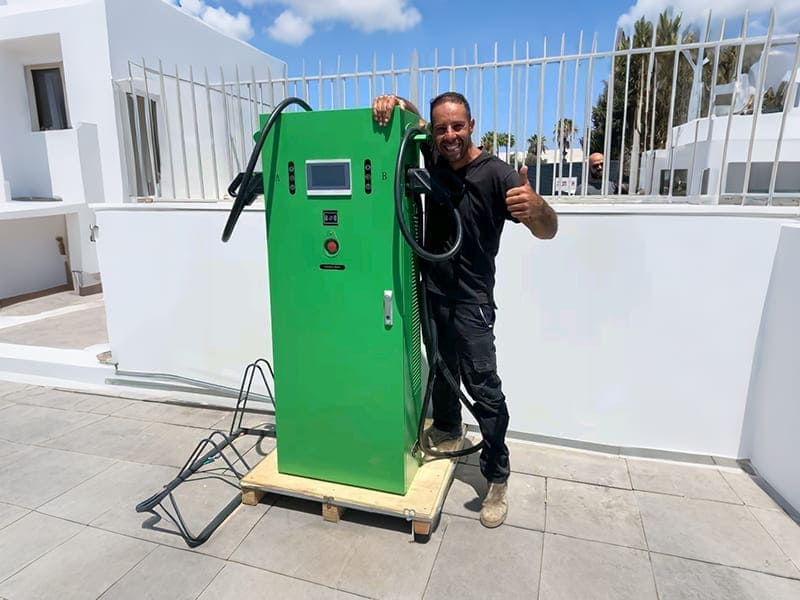
Choosing the right hardware is just as important as location. For example, a DC fast EV charging station is perfect for highway rest stops. It provides a quick energy boost for travelers. Conversely, alternating current chargers are better suited for offices and residential areas. They allow for overnight or full-workday charging sessions.
Diverse Solutions for Different Needs
Commercial DC fast EV chargers come in various power outputs. Options range from twenty-kilowatt units to three-hundred-twenty-kilowatt systems. Many units feature multiple connectors like CCS2 and CHAdeMO. This ensures compatibility with all vehicle types. For instance, a fleet-focused Electric Vehicle charging station in Dubai might require a high-power split-type system. These can reach up to nine-hundred-sixty kilowatts for rapid depot charging.
The Regulatory Framework in Dubai
Dubai Electricity and Water Authority regulates the sector strictly. Independent operators must obtain a Charge Point Operator license. The framework supports both alternating current and direct current installations. However, higher capacity units need specific approval. Therefore, understanding these rules is the first step for any developer.
Navigating Permitting and Compliance
The permitting process involves multiple agencies. This can sometimes extend project timelines. Nevertheless, the government is streamlining these procedures. Compliance with safety standards like IEC 61851 is mandatory. Additionally, all public stations must integrate with DEWA’s smart grid systems. Successfully navigating this process validates the business model.
Future Outlook and Investment Appeal
The market for an EV charging station in Dubai is projected to grow significantly. The government aims for thirty percent of public sector vehicles to be electric by 2030 . This creates a stable, long-term demand environment. Consequently, private investment is flowing into the sector. Public-private partnerships are becoming increasingly common.
Conclusion
Building a successful charging business requires careful planning. Site selection must prioritize high-dwell-time locations. Revenue models should mix energy sales with ancillary services. Furthermore, choosing reliable, multi-standard technology is crucial. With the right strategy, an EV charging station in Dubai can deliver strong returns. It also contributes to the emirate’s vision of a sustainable future. The time to invest in this growing market is now.