
The future for EV charging station is bright and fast-changing. By 2030, experts see a massive shift. Aegen, a Chinese EV charging station maker, leads this change. Aegen produces home and commercial charging stations. The company offers free technical support too. Aegen also provides custom services for clients. Moreover, Aegen partners with many EV charger distributors. Consequently, these partnerships boost global availability. In addition, Aegen works with assembly firms. It supplies parts or complete units to them.
Rapid Growth and Global Reach
Aegen’s product line covers diverse power needs. For instance, its DC fast EV chargers include 20kw, 40kw, 60kw, 80kw, 120kw, 160kw, 240kw, and 320kw models. Similarly, Aegen sells AC home and commercial chargers: 7kw, 11kw, and 22kw. Furthermore, Aegen manufactures split-type stations: 480kw, 720kw, and 960kw. These products sell well in Central Asia, the Middle East, Europe, and South America. Therefore, customers praise Aegen for reliability and performance. This success shapes the future for EV charging station worldwide.
Testing Tools Ensure Quality
Aegen also produces an EV charger tester. Installation and assembly firms use this tool. Specifically, the tester checks communication in EV charging stations. As a result, it prevents many technical issues. Thus, the future for EV charging station depends on such testing. Without proper testing, networks may fail. Hence, Aegen supports stable operations globally.
What 2030 Will Look Like
By 2030, most charging will be ultra-fast and smart. Firstly, 320kw and 960kw stations become common. Secondly, wireless charging may appear in cities. Thirdly, AI will manage energy loads automatically. For example, stations will talk to cars and grids. Then, they will adjust power in real time. This reduces waste and waiting. Meanwhile, the future for EV charging station includes robotic connectors. These robots plug into cars without human help. Accordingly, charging becomes effortless for drivers.
Integration with Renewable Energy
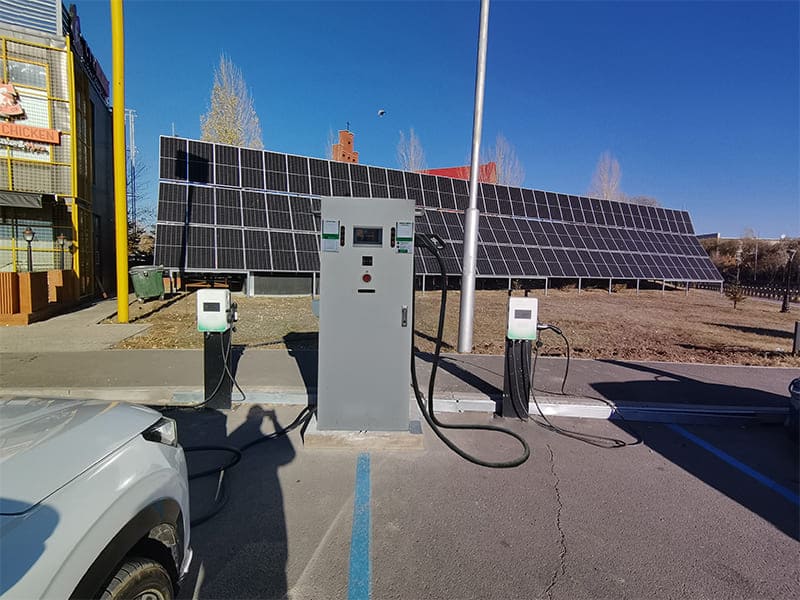
Solar and wind will power many stations. Batteries at each site store excess energy. Consequently, stations operate even during blackouts. Aegen supports this trend with flexible DC chargers. Their split-type designs fit solar canopies perfectly. Moreover, V2G technology lets cars send power back. So, each parked EV becomes a grid resource. This synergy defines the future for EV charging station.
Affordability and Accessibility
Costs will drop significantly by 2030. Mass production and competition drive prices down. Therefore, more businesses and homes install chargers. Aegen’s 7kw and 11kw AC units are ideal for homes. Meanwhile, its 22kw AC suits small shops. For highways, 160kw and 240kw DC units dominate. Additionally, payment systems become seamless. You simply tap your phone or car. No cards or apps are needed. Such convenience expands adoption.
Aegen’s Role in This Future
Aegen already supplies key regions: Central Asia, Middle East, Europe, and South America. Their clients include distributors, installers, and assembly companies. Free technical support helps partners succeed. Customization meets local needs too. For instance, some countries require rugged outdoor units. Others need compact designs for garages. Aegen delivers both. Hence, the future for EV charging station relies on flexible manufacturers like Aegen. EV charging station Portable for resellers: high profit margin?
Challenges to Overcome
Still, some hurdles remain. Grid upgrades are expensive. Permitting processes can be slow. Also, standardization varies by region. Nevertheless, companies like Aegen adapt quickly. They offer multi-standard chargers (CCS, CHAdeMO, GB/T). As a result, they reduce compatibility issues. Another challenge is maintenance. However, remote diagnostics and tester tools solve this. Aegen’s EV charger tester ensures smooth communication daily.
Conclusion: A Connected, Green Future
By 2030, charging stations will be everywhere. They will be fast, smart, and green. Drivers will rarely think about range anxiety. Instead, charging will feel like parking. For businesses, stations become profit centers. They attract customers and sell energy. For the planet, EVs and renewables cut emissions. Ultimately, the future for EV charging station depends on innovation and partnership. Aegen demonstrates this by selling quality units, offering free support, and enabling custom solutions. With testers and split-type stations up to 960kw, Aegen shapes tomorrow. Therefore, the future for EV charging station is not a dream. It is an unfolding reality led by companies like Aegen.