
Consumers ask: how much do EV charging stations cost? Fast-charging expenses vary significantly. Several factors influence the final price. Commercial DC fast EV charging stations dominate public networks. Their costs depend on power output and features. Importantly, installation location also impacts overall expense. We will explore the key pricing variables.
Types of Commercial DC EV Charging Stations
Commercial stations come in several power tiers. Common models range from 20kW to 40kW. Mid-range options are 60kW to 120kW units. Higher power includes 120kW to 240kW chargers. The most powerful are 60kW to 320kW systems. Consequently, power level directly affects purchase price. Furthermore, configuration choices alter cost. Stations can have dual, triple, or quadruple plugs. Large sites use split-type charging systems. These are for parking lots or highways. So, how much do EV charging stations cost here? Premium power and plugs increase investment.
Connector Types and Vehicle Compatibility
Multiple plug standards exist globally. Common types are CCS2 and CCS1. Others include GB/T and CHAdeMO. The NACS standard is growing in popularity. Therefore, stations often feature multiple connectors. This compatibility adds to unit complexity. However, it serves more customer vehicles. Ultimately, versatility influences upfront cost. A station with two connector types costs more. Yet it generates more revenue potential.
Primary Applications for Fast Chargers
High-traffic retail locations are ideal. These include supermarkets and shopping centers. Also, home improvement stores use them. Transportation hubs are another key site. Airports and train stations need them. Major highway service areas require chargers. Urban parking garages are common hosts. So, how much do Electric Vehicle charging stations cost for these sites? High-usage sites justify larger investments.
Secondary Applications for Fast Chargers
Daily commuting destinations are important. Office parks and government buildings install them. Residential areas and hotels also deploy units. Fleet operations use dedicated stations. Logistics centers rely on fast charging. Taxi stands and bus depots need them. Car dealerships install chargers too. Leisure venues are expanding installations. Restaurants and cinemas add chargers. Stadiums and tourist attractions adopt them.
Cost Analysis for Fast Charging
Ultimately, how much do EV charging stations cost to use? Pricing is not straightforward. Drivers pay for electricity consumed. They also pay for speed and convenience. Network fees might apply additionally. Station owners set final prices. Rates change by location and time. For example, a 160kW charge costs more. However, it saves considerable time. Thus, many drivers choose fast charging.
The 20kW/30kW Fast Charger Option
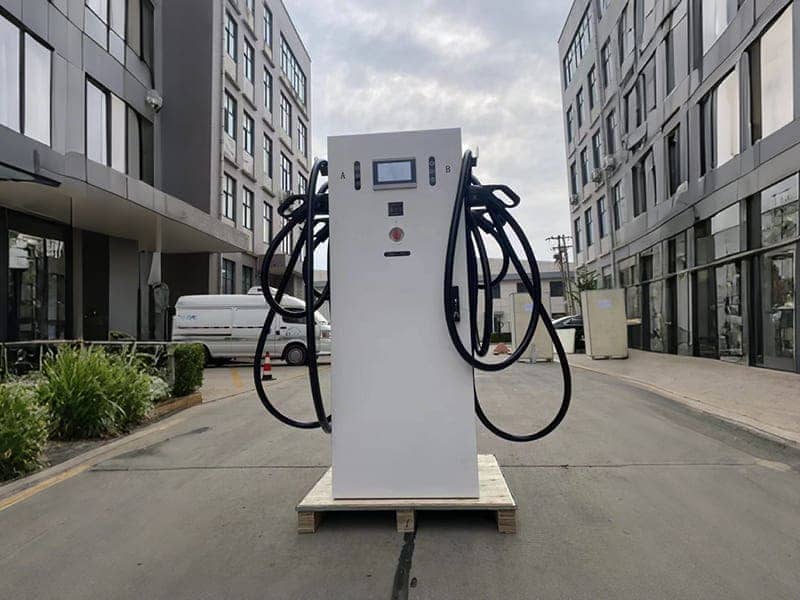
Consider the fast 20kW/30kW EV charging station model. It offers one-button start operation. This design is very simple to use. It provides relatively quick charging speeds. Importantly, it has a lower price point. Therefore, it is suitable for fleet operations. This charger is versatile for commercial use. It also functions well for residential settings. Workplaces and apartments can install it. So, how much do EV charging stations cost like this? They are a lower-entry option.
Factors Determining Charging Cost
Firstly, electricity rates are fundamental. Utility costs differ regionally. Secondly, demand charges affect pricing. These are for commercial power users. Thirdly, equipment depreciation matters. Network subscription fees may apply. Additionally, maintenance costs add expenses. Profit margins are also factored in. So, how much do EV charger stations cost operators? These elements create the final fee.
Regional Variations in Charging Prices
Prices fluctuate across countries and states. For instance, California has higher rates. Conversely, Texas often has lower prices. Europe shows similar variability. Asia also has diverse pricing structures. Furthermore, urban areas usually cost more. Rural stations might be cheaper. However, they are less common. So, how much do EV charging stations cost locally? Always check real-time pricing apps.
The Business Case for Station Owners
Station ownership is a business decision. The initial hardware investment is large. Installation and grid upgrades are costly. However, revenue comes from charging sessions. Additionally, advertising can provide income. Some locations offer charging as an amenity. Thus, they do not seek direct profit. So, how much do Electric Vehicle charging stations cost to own? The answer involves complex calculations. How much does the cost of EV charging station equipment vary by type?
Future Trends in Fast Charging Costs
Technology improvements will reduce costs. Economies of scale are already helping. Consequently, hardware prices are falling. However, electricity prices may rise. Government incentives also play a role. They can subsidize installation costs. So, how much do EV charging stations cost tomorrow? They will likely become more affordable.
Conclusion
In summary, fast charging costs are multifaceted. Drivers see a price per kilowatt-hour. That price reflects many underlying factors. Station power and type matter greatly. Location and application are crucial too. Operators must cover their own costs. So, how much do EV charging stations cost? The question has layered answers. Ultimately, the market is evolving rapidly. Costs are trending downward for hardware. Usage pricing seeks a stable balance.