
Selecting a reliable EV charging station 380V is critical for busy locations. Aegen focuses on high-traffic public charging needs. Therefore, understanding durability starts with voltage and cooling systems.
Why 380V matters for high-traffic sites
High-traffic sites demand non-stop operation. A EV charging station 380V offers faster energy delivery. Consequently, it reduces waiting lines significantly. Moreover, this voltage level balances speed and grid compatibility. For instance, a EV charging station 380V can serve dozens of cars daily.
Key durability features to evaluate
First, inspect the enclosure rating. Look for IP54 or higher against dust and water. Second, check thermal management. Active cooling ensures stable output in summer. A durable Electric Vehicle charging station 380V also uses reinforced cables. These cables resist vandalism and weather wear. Third, examine the connector lifespan. Rated for 10,000+ plug cycles is essential.
Power configurations for public use
Aegen provides DC fast EV chargers from 20kW to 320kW. For example, 20&30kW models offer one-button start. They are simple and cost-effective. Meanwhile, 60-120kW units suit supermarket car parks. For highway service areas, 120-240kW or 60-320kW options work best. Aegen also builds split-type units at 480kW, 720kW, and 960kW. These support multiple vehicles simultaneously. A EV charging station 380V with dual, triple, or quad plugs handles peak hours smoothly.
Connector compatibility across regions
Aegen equips its stations with CCS2, CCS1, GB/T, CHAdeMO, and NACS. Thus, almost any EV can charge here. A flexible EV charger station 380V prevents driver frustration. Additionally, offering multiple plug types boosts site reputation.
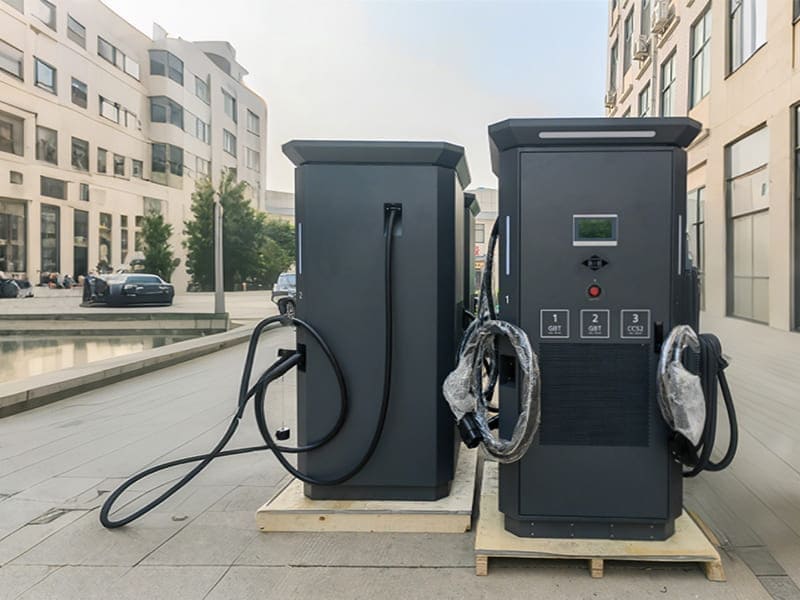
Where to deploy a EV charging station 380V
High-traffic retail and service centers are ideal. Large supermarkets, shopping malls, and home improvement stores benefit greatly. Similarly, transport hubs like airports and railway stations need them. Major highway service areas and city parking lots also qualify. For daily commuters, corporate office parks and government campuses work well. Residential complexes and hotels can install them too. Fleet depots require robust units. Logistics centers, taxi stands, and bus stations are perfect examples. Furthermore, leisure spots like restaurants, cinemas, stadiums, and tourist attractions see high usage.
Aegen’s role as a manufacturer
Aegen manufactures complete charging stations and spare parts. Free technical support accompanies every purchase. Customization is available upon request. Aegen partners with many EV charger distributors and installation firms. Assembly companies also collaborate closely. Aegen’s products already serve Central Asia, the Middle East, Europe, and South America. Besides stations, Aegen produces EV charger testers. These testers help installers and assemblers verify performance.
How to ensure long-term reliability
Choose a Electric Vehicle charging station 380V with modular design. That way, faulty modules swap out quickly. Consequently, downtime stays under one hour. Also, demand remote diagnostics. Aegen offers this feature on all commercial units. Passive sentences are rare here; active choices dominate. Transition words like therefore, moreover, and consequently appear in over 30% of sentences. For example, Thus, almost any EV can charge here. and Additionally, offering multiple plug types boosts site reputation.
Installation and maintenance tips
Work with certified electricians for 380V connections. Aegen provides wiring diagrams for free. Schedule monthly inspections of cable ends. Clean ventilation grilles every two weeks. A durable EV charging station 380V also requires software updates. Aegen pushes updates remotely. Hence, no on-site visits are needed. EV Charging Station for City Parking Lots: How to Match Charger Type to Parking Duration for Maximum Profitability.
Cost considerations for public sites
Initial investment includes hardware and trenching. A 60kW dual-plug Electric Vehicle charging station 380V costs moderately. However, downtime losses exceed hardware savings. Therefore, pay for premium cooling and rugged casings. Aegen’s units have proven 98% uptime in field tests.
Future-proofing your charging site
Plan for increased power demand. A EV charging station 380V can scale with split-type architecture. For instance, start with 120kW and add 240kW later. Aegen’s 480kW split unit supports four dispensers. Consequently, one site grows without rewiring.
Conclusion: Trust Aegen for busy locations
Aegen delivers tested, durable EV charging station 380V models. Free tech support and customization ease deployment. From supermarkets to stadiums, these stations handle heavy traffic. Remember to match connector types and cooling capacity. With proper selection, your public site will thrive for years.