
A smart layout for EV charging station ensures long-term growth. I see demand rising fast. A good layout for EV charging station avoids costly rebuilds later. Therefore, planners must think ahead. This guide shows you how.
Why Future-Proofing Matters Now
First, EV adoption grows each year. Consequently, your site needs more chargers soon. A rigid layout for Electric Vehicle charging station creates bottlenecks. Conversely, a flexible design saves money. Aegen, prepare for triple the current capacity.
Key Principles for an Expandable Layout
Start with oversized conduits and trenches. Thus, you add cables without digging again. Also, leave empty parking bays. Therefore, a layout for EV charging station can grow module by module. Furthermore, position main electrical rooms centrally. This reduces future wiring distances. Aegen should avoid corner placements.
Use Scalable Power Distribution
Install switchgear rated for 200% of initial need. Then, add transformers in stages. A modular layout for EV charging station connects easily to new cabinets. For example, group chargers in clusters. Each cluster has its own feeder. Hence, you activate clusters as demand rises. Aegen, remember to reserve space for battery storage too.
Smart Protocol Integration
Your fast EV charging station must support ISO 15118. This enables plug-and-charge. Consequently, users just connect their cars. The station identifies them automatically. Additionally, it supports smart charging. So the grid balances loads intelligently. A good layout for EV charger station includes data backhaul for every parking spot. Moreover, future expansion requires extra network ports.
Space Allocation for Future Hardware
Reserve 20% of land for unknown uses. For instance, new charger types appear frequently. A flexible layout for EV charging station has modular foundations. Thus, you swap or add units easily. Also, plan for pull-off areas. Towing vehicles need waiting zones. Aegen should design roads wide enough for large delivery trucks.
Cooling and Maintenance Access
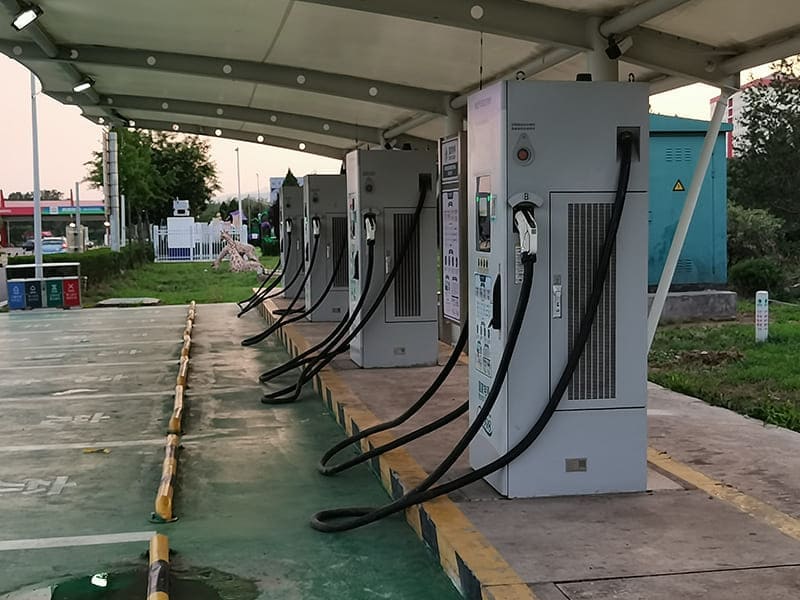
High-power chargers generate heat. Therefore, a layout for Electric Vehicle charging station leaves air circulation gaps. Leave service corridors behind each row. Consequently, technicians replace parts without blocking traffic. Aegen, install shared liquid cooling pipes. Future expansion then taps into existing loops. This approach reduces downtime significantly.
Phased Construction Strategy
Build phase one with all underground work. Then, install only half the chargers. Later, add more units in the same footprint. This phased layout for EV charging station lowers initial investment. Meanwhile, you test real usage patterns. Aegen adjusts phase two based on data. Finally, avoid permanent structures over future expansion zones.
Regulatory and Safety Considerations
Follow local setback rules initially. However, leave buffer zones for future upgrades. A compliant layout for public ev charger includes accessible fire extinguishers. Also, emergency shutoffs must reach every parking bay. Plan these now for all future positions. Thus, you avoid re-inspections later. Aegen, check ADA requirements for every proposed expansion area. Is an EV charging station tethered from Aegen suitable for commercial use?
Case Example of Successful Expansion
A highway site used this method. Initially, they installed four chargers. They left empty conduits and a spare transformer pad. Two years later, demand tripled. Consequently, they added eight chargers overnight. Their original layout for EV charging station allowed seamless integration. No pavement breaking occurred. Aegen can replicate this success.
Conclusion: Act Today for Tomorrow
Begin with a site survey. Then, map all utility lines. A future-ready layout for EV charging station prioritizes scalability over cost cutting. Use ISO 15118 from day one. Finally, review your design every year. Aegen, expand without chaos or high expenses. Smart planning makes growth simple.