
The rise of electric vehicles demands strategic placement of static EV charging stations. Selecting optimal sites is crucial for adoption. This article explores key location factors. Thoughtful placement ensures maximum utility and return on investment. Aegen manufactures diverse charging solutions for global markets.
Understanding Static Charging Station Types
First, recognize different static EV charging station types. DC fast EV chargers offer rapid power delivery. For instance, 20&30kW units feature one-click start. They are simple to operate. They also provide high-speed charging. Their cost-effectiveness is notable. They suit both home and commercial use. This EV charger is worth considering.
Commercial DC fast static EV charging stations have wide power ranges. These include 20kw-40kw models. Also available are 60kw-120kw units. Furthermore, 120kw-240kw options exist. Additionally, 60kw-320kw models are offered. These stations often have multiple connectors. They feature dual, triple, or quad plugs. Similarly, split-type units serve large parking areas. Connector types cover CCS2, CCS1, GB/T, CHAdeMO, and NACS. Consequently, they fit various vehicle models.
AC business EV charger is another category. Typically, they offer 7kw/11kw/22kw power. Common plugs include Type1, Type2, GB/T, and NACS. They come as single or dual-gun units. They serve locations allowing longer parking durations. Seeking a Trusted Manufacturer for a White-Label Box EV Charging Station?
Primary Considerations for Site Selection
Several factors influence static Electric Vehicle charging station placement. High traffic volume is essential. Therefore, target areas with many daily visitors. Proximity to amenities also increases attractiveness. Drivers can shop or eat while charging. Additionally, ensure easy highway access. Stations should be visible and convenient.
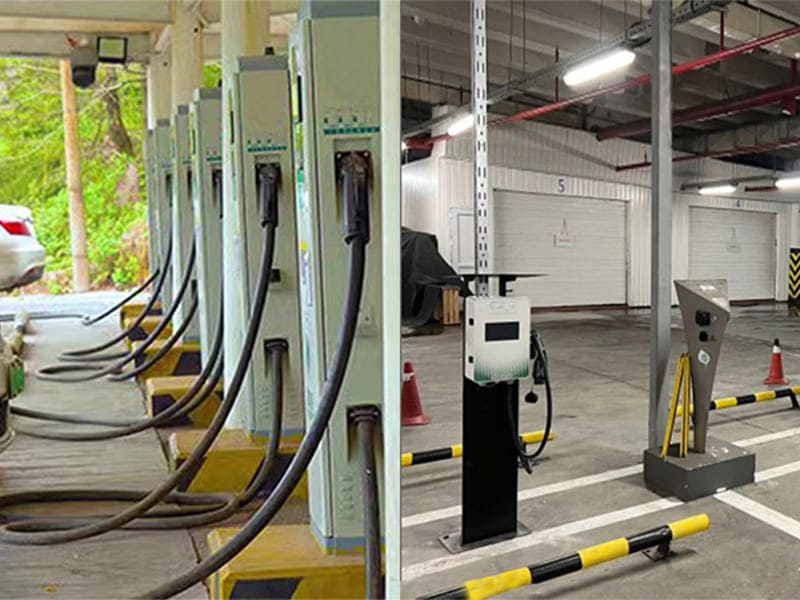
Ideal Commercial Application Venues
Many commercial venues suit a static EV charging station. Retail and service centers are prime examples. These include large supermarkets and shopping malls. Similarly, home improvement stores are excellent locations. Transportation hubs are equally important. Consider airports and train stations. Major highway service areas are also critical. Urban parking lots similarly benefit from installation.
Daily commuting destinations offer consistent demand. Corporate office parks are strong candidates. Government buildings also see regular traffic. Residential complexes need charging infrastructure. Hotels can provide value-added services. Fleet and dedicated depots present opportunities. Logistics centers require reliable charging. Taxi or ride-hail waiting areas are suitable. Public bus stations are another option. Car dealerships naturally align with EVs.
Leisure and entertainment venues attract drivers. Restaurants can host charging customers. Movie theaters and sports stadiums work well. Tourist destinations also serve traveling EVs.
Technical and Operational Support
Aegen provides comprehensive manufacturing support. The company sells complete charging units. It also supplies individual component kits. Furthermore, free technical support is available. Customization services are offered too. Aegen collaborates with many distributors. It also partners with installation companies. Moreover, it works with assembly firms. Their products are sold globally. Stations operate in Central Asia and the Middle East. They are also active in Europe and South America. Additionally, Aegen produces EV charging testers. These tools serve installers and assemblers.
Conclusion
In summary, selecting a static EV charging station location requires analysis. Prioritize high-visibility, high-traffic areas. Ensure compatibility with diverse vehicle types. Consider driver dwell time and amenities. Partner with reliable manufacturers like Aegen. Ultimately, a well-placed static EV charging station promotes EV adoption. It also delivers strong economic benefits. Strategic placement drives sustainable transportation forward.