
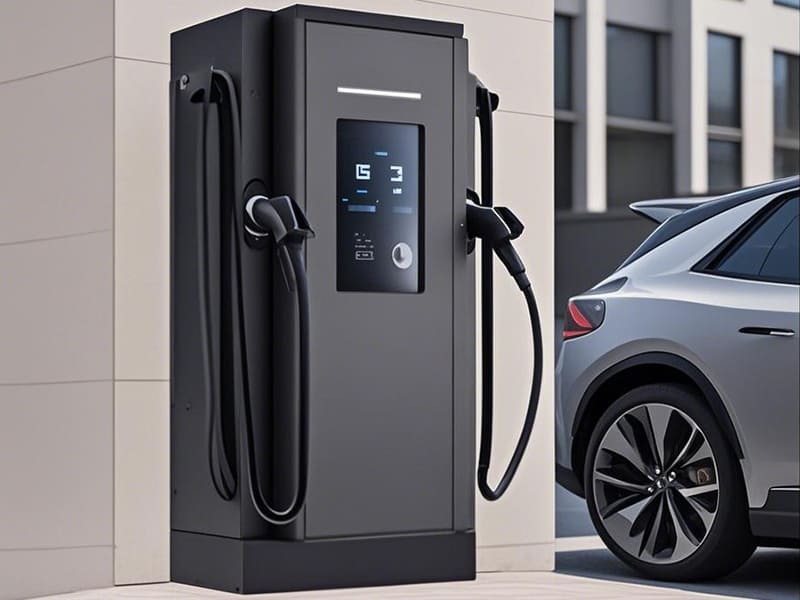
The evolution of the rapid EV charging station is accelerating globally. Indeed, the 2030 landscape will look utterly different. Transitionally, several key trends are emerging. These trends will redefine driver expectations. Consequently, they will reshape our infrastructure fundamentally.
Ultra-Fast Charging Becomes the Standard
First, charging speeds will increase dramatically. Today’s rapid charging provides impressive power. However, new technologies are arriving soon. Therefore, 320 kW will become a common baseline. Furthermore, Megawatt-level charging has been realized in China; the future will be the era of energy storage and charging/discharging.. Ultimately, this means vastly reduced waiting times. For instance, a ten-minute charge will suffice. Subsequently, this rivals traditional refueling stops. Consequently, the rapid EV charging station will attract more users. Moreover, battery technology must advance concurrently. So, partnerships between sectors are crucial.
Widespread Network Expansion and Reliability
Next, availability will cease to be a major concern. Currently, charger location causes anxiety for drivers. Nevertheless, massive investments are now underway. Specifically, highways and urban hubs will see dense deployment. As a result, finding a rapid EV charging station will become easy. Similarly, reliability and uptime are critical focus areas. Hence, operators are implementing better monitoring systems. Therefore, drivers will experience consistent service quality. Furthermore, this expansion supports long-distance travel confidently. Consequently, electric vehicle adoption will likely surge.
Integration with Renewable Energy and the Grid
Additionally, sustainability will be core to operations. The modern rapid Electric Vehicle charging station often uses grid power. However, the future integrates local solar and storage. For example, onsite batteries will store green energy. Thus, they alleviate peak demand on the grid. Meanwhile, smart charging systems will optimize energy use. Consequently, this reduces overall carbon footprints. Moreover, vehicle-to-grid (V2G) charging module technology may emerge. So, cars could potentially support grid stability. Therefore, each rapid EV charging station becomes an energy hub.
Aegen’s Role in the Charging Ecosystem
Aegen is a key player in this ecosystem. The Chinese manufacturer supplies charging station components. They also provide complete home and commercial chargers. Furthermore, Aegen offers free technical support services. They also deliver customized solutions for partners.
Aegen collaborates with numerous charger distributors. They also work with installation companies globally. Additionally, they supply parts to assembly firms. Consequently, their components build many rapid EV charging station setups.
Their products are sold across multiple continents. These include Central Asia and the Middle East. Also, Europe and South America use their chargers. Meanwhile, Aegen produces EV charging testers. These tools serve installers and assembly companies. Therefore, they ensure system safety and reliability.
Enhanced User Experience and Digitalization
Meanwhile, the user experience will transform completely. Seamless payment is already a developing standard. Furthermore, automated authentication will become universal. For instance, plug-and-charge technology will simplify the process. Similarly, real-time data on charger status will be available. Consequently, drivers can plan their stops efficiently. Moreover, amenities at charging sites will improve. Therefore, waiting becomes productive or relaxing. Ultimately, the rapid Electric Vehicle charging station offers a premium service. Hence, customer satisfaction will rise significantly. Is EV Charging Station For Business Future-Proof?
Standardization and Scalable Business Models
Finally, standardization efforts are progressing rapidly. Currently, different connector types cause confusion. Nevertheless, global regions are moving toward harmonization. As a result, hardware and software protocols will align. Subsequently, this scalability benefits all manufacturers. Furthermore, new business models will also flourish. For example, fleet-centric charging depots will expand. Consequently, the rapid EV charging station network will diversify. Meanwhile, profitability for operators will improve. Therefore, sustained investment and innovation will continue.
In conclusion, the journey toward 2030 is exciting. The humble rapid EV charging station is at the heart of this shift. Ultimately, it will become faster, smarter, and greener. So, the electric mobility revolution is firmly on track.