
Understanding the different charging station types is crucial. Many drivers ask: how to EV charging stations work? Essentially, they safely transfer electricity to your vehicle. At Aegen, we explain this process clearly. Different types function in distinct ways. This guide will detail each type’s operation. We will explore commercial and home solutions. Finally, we highlight our global expertise.
Fundamental Principles: How to EV Charging Stations Work
All stations share a basic workflow. First, the station verifies user authentication. Next, it communicates with the electric vehicle. Then, it safely initiates the power transfer. The core component manages this process. It is called the Charging Control Unit (CCU). This explains the basic how to EV charging stations work. Now, let’s explore the specific types.
Commercial DC Fast EV Charging Stations
These stations provide very rapid charging. They use direct current (DC) power. Therefore, they bypass the car’s internal converter. This allows much faster energy transfer. Power levels range from 20kW to 320kW. Connectors include CCS1, CCS2, and GB/T. CHAdeMO and NACS are also available.
So, how to Electric Vehicle charging stations work in this context? Drivers simply plug in the connector. The station and car then communicate digitally. They agree on the maximum safe power rate. Subsequently, DC power flows directly to the battery. The station constantly monitors safety. It stops when the battery is full. These stations suit high-traffic locations perfectly. They serve highways and shopping centers effectively.
Commercial AC Charging Posts
These posts use alternating current (AC). They are for longer parking durations. Common power levels are 7kW, 11kW, and 22kW. They feature Type 1, Type 2, or GB/T connectors. You can find single or dual-gun models.
The process for how to EV charging stations work here differs. AC power is delivered to the vehicle. However, the car’s onboard charger converts it. It changes AC power into DC power. This conversion limits the charging speed. Therefore, these stations are slower. They are ideal for workplaces or public lots. Drivers can charge during work or overnight.
Solar & Storage Charging Stations
These are advanced hybrid systems. They integrate solar panels and batteries. They often pair with DC fast chargers.
Explaining how to Electric Vehicle charging stations work here is interesting. First, solar panels generate clean electricity. This power charges a large battery storage unit. Then, the station draws energy from these batteries. Consequently, it reduces grid dependence significantly. It also lowers operating costs. This system is perfect for remote areas. It also benefits regions with expensive electricity.
Home DC Fast EV Chargers
Aegen offers compact DC units for homes. Power levels are typically 20kW or 30kW. They feature simple one-button operation.
How to EV charging stations work at home with DC? The principle resembles commercial DC charging. However, the power level is lower. It provides rapid home charging for fleets. It is also suitable for large home batteries. The process is swift and straightforward. It bridges home and commercial charging needs effectively.
Home AC Wallbox Chargers
These are the most popular home solutions. Standard power levels are 7kW to 22kW. They are mounted on a wall or a post.
The answer for how to Electric Vehicle charging stations work here is common. They supply AC power to your vehicle. Your car’s onboard charger then handles conversion. Installation is typically simple. They are perfect for overnight charging sessions. Drivers plug in when they get home. The car is fully charged by morning.
Portable EV Chargers
These are flexible emergency devices. They plug into standard household outlets. Power levels range from 3.5kW to 11kW.
Understanding how to EVcharger stations work portably is key. They are simply connected to a socket. They provide AC power slowly. They are very convenient for travel. However, charging speed is very slow. They are best for emergency top-ups only. They are not for regular daily charging.
The Brain: Aegen’s Charging Control Unit (CCU)
All these systems require a brain. This is the Charging Control Unit (CCU). Aegen self-develops this core technology. It is vital for how to EV charging stations work safely. Our CCU manages the entire dialogue. It communicates between the grid and the vehicle. It also controls safety protocols precisely. Most market CCUs originate from our company. Therefore, we power the industry reliably.
Ensuring Reliability: Aegen’s EV Charger Tester
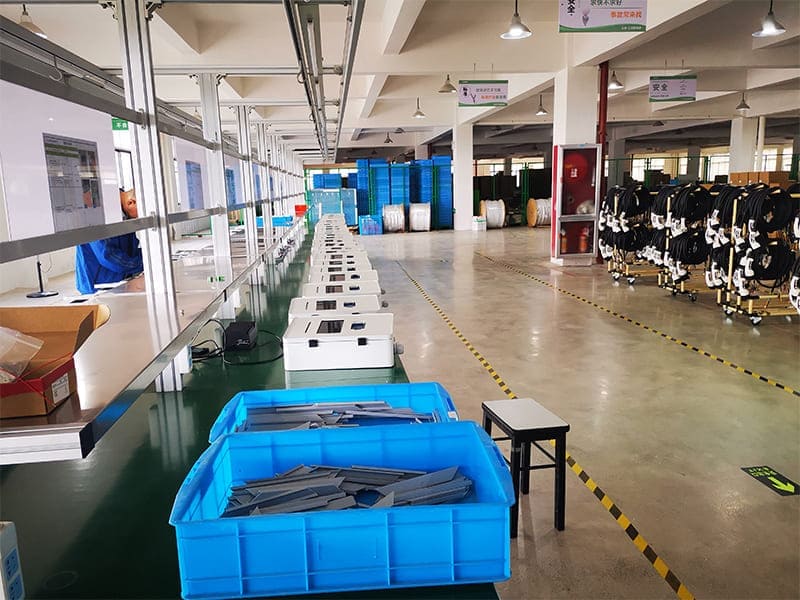
Reliable operation is absolutely essential. So, we manufacture EV charger testers. Installers and assemblers use them widely. They validate communication and safety functions. They answer the practical how to EV charging stations work question. They ensure every station performs perfectly before use. What is the business model for EV charging stations to make money?
Global Deployment and Support
Aegen’s stations operate worldwide successfully. We serve Europe, the Middle East, and Central Asia. We also operate in South America. Our products receive high customer praise. We provide complete technical support freely. We also offer full customization services. Our network includes many partners globally.
Conclusion: Choosing Your Solution
In summary, types vary by speed and location. Understanding how to EV charging stations work helps you choose. Consider your daily driving range needs. Also, consider your typical parking duration. Aegen provides the perfect solution for everyone. Contact us for your specific charging project. Let’s build the future of electric mobility together.