
This is a common question we receive at Aegen. Understanding an EV charging station DC or AC is fundamental. Essentially, it defines the power type and speed. As a manufacturer, we provide clear explanations. We also supply both technologies globally. This guide will detail their differences and applications.
Fundamental Power Distinction
The core difference lies in electrical current. AC stands for Alternating Current. DC means Direct Current. The grid supplies power as AC. However, an EV’s battery stores DC power. Therefore, conversion is necessary for charging.
How AC Charging Works
An AC EV charging station DC or AC delivers grid power. The power remains as Alternating Current. It travels through the station’s cable. Then, it enters the electric vehicle. The car’s onboard converter changes AC to DC. Finally, DC power enters the battery. This conversion limits speed significantly.
How DC Fast Charging Works
Conversely, a DC EV charging station DC or AC converts power first. The station itself houses a large converter. It changes grid AC power to DC immediately. Then, it sends DC power directly to the battery. This bypasses the car’s slower onboard charger. Consequently, charging is dramatically faster.
Speed and Time Comparison
Speed is the most noticeable difference. AC charging is generally slower. It is perfect for longer dwell times. For example, a 22kW AC station adds range slowly. Meanwhile, DC charging is exceptionally fast. A 120kW DC EV charging station can charge in minutes. Thus, choosing an EV charging station DC or AC depends on urgency.
Typical Power Levels and Connectors
Power outputs also differ greatly. Our commercial AC units are 7kW to 22kW. They typically use Type 2 or GB/T connectors. Our DC stations range from 20kW to 320kW. They use CCS, CHAdeMO, or GB/T plugs. Therefore, connector types often indicate the EV charger station DC or AC type.
Ideal Use Cases for AC Charging
AC charging suits specific scenarios perfectly. It is ideal for destinations. People park there for several hours. Common locations include workplace car parks. Residential community lots also benefit. Furthermore, hotels and restaurants use AC stations. Drivers can charge while they work, sleep, or dine.
Ideal Use Cases for DC Fast Charging
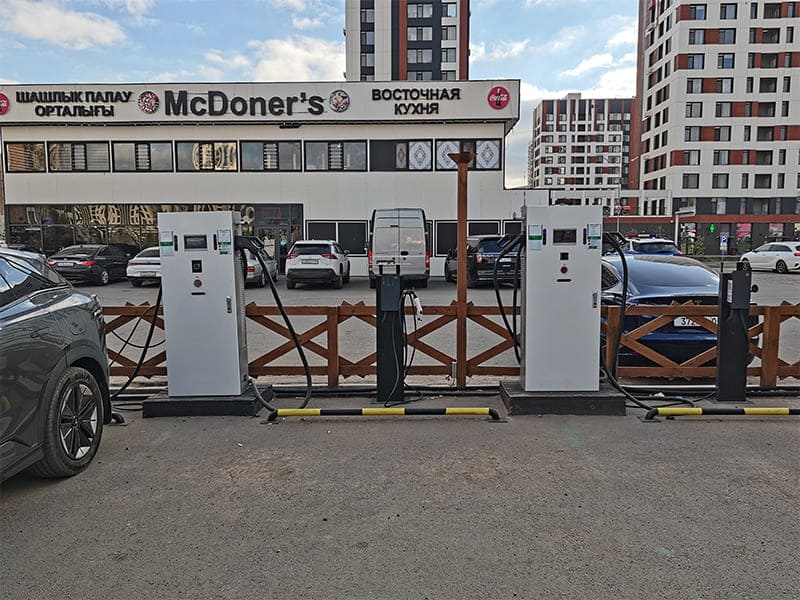
DC charging serves a different need. It is for en-route charging and high turnover. It is essential along major highways. Busy service areas require DC stations. Additionally, taxi fleets and logistics hubs use them. Anywhere time is critical, DC is the solution. This clarifies the Electric Vehicle charging station DC or AC decision.
Commercial Applications with Aegen
At Aegen, we design stations for real-world use. Our commercial solutions are robust and reliable.
Our Commercial DC Fast Charging Portfolio
We offer a wide DC power range. Models span from 20kW to 320kW. They feature multi-gun designs for efficiency. Connectors include CCS1, CCS2, and GB/T. Also available are CHAdeMO and NACS. These stations serve high-traffic locations. They are perfect for shopping centers. Similarly, they excel at airports and bus stations.
Our Commercial AC Charging Solutions
Our AC posts offer smart charging. They come in 7kW, 11kW, and 22kW variants. You can choose single or dual connectors. They use Type 1, Type 2, or GB/T standards. These are perfect for corporate campuses. Moreover, they fit public residential parking areas beautifully.
Integrated Solar & Storage Stations
We also innovate with hybrid systems. These combine solar power with batteries. They often support a DC EV charging station DC or AC. This setup reduces operational costs greatly. It is ideal for areas with expensive or unreliable grids.
Home Charging: DC or AC?
Home charging presents another choice. Traditionally, homes used AC. However, new options are emerging.
Residential DC Fast Chargers
Aegen now offers home DC units. They provide 20kW or 30kW power. They feature simple one-button operation. They are surprisingly affordable. These are great for homes with multiple EVs. They are also perfect for private fleets. Thus, the Electric Vehicle charging station DC or AC question reaches home.
Traditional AC Home Wallboxes
The classic home choice is AC wallboxes. We provide 7kW to 22kW models. Installation is easy in garages or outdoors. They are ideal for convenient overnight charging. Consequently, they fully utilize lower nighttime electricity rates.
Portable AC Chargers
For ultimate flexibility, we offer portable chargers. They are AC units rated from 3.5kW to 11kW. Drivers keep them in the car for emergencies. However, their charging speed is very slow. They are a backup solution, not for daily use.
Making the Right Choice for Your Needs
So, how do you choose? Consider the required parking time. Also, evaluate the available electrical infrastructure. Furthermore, analyze the total cost of ownership. Aegen experts can guide you. We help you select the right EV charging station DC or AC type. What Makes Aegen An Ideal Manufacturing Partner For EV Charging Station Companies?
Aegen’s Global Support and Quality
We support our products worldwide. Our stations operate across continents. They serve Europe, the Middle East, and Central Asia. Furthermore, they are active in South America. We provide free technical support always. We also offer custom service solutions. Our partners include installers and assemblers globally.
Conclusion
In summary, both types are vital. AC charging is the widespread, foundational layer. DC fast charging enables long-distance travel. Understanding an EV charging station DC or AC is key. It ensures the right technology for each location. Aegen is your trusted partner for both. Contact us to power your electric future today.