
Highway service areas are evolving into energy hubs. A battery storage EV charging station solves critical grid problems. These locations often suffer from weak electrical infrastructure. A battery storage EV charging station stores energy during off-peak hours. It then releases power during high-demand periods. This ensures drivers always get a fast charge. For operators, this model reduces demand charges significantly. Consequently, highway stops become more profitable and reliable.
The Grid Challenge on Open Roads
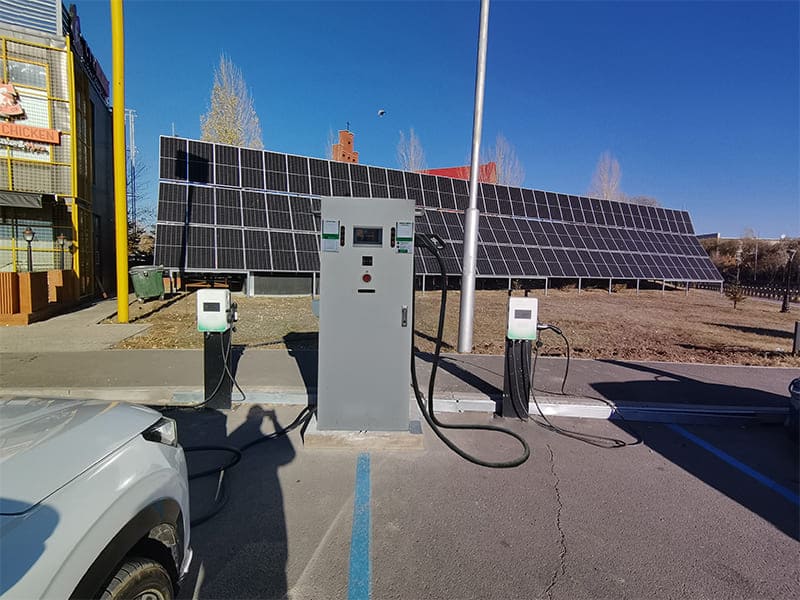
Firstly, many highway service areas sit at the end of the grid. Upgrading power lines to these remote locations can cost millions. However, a battery storage EV charging station bypasses this need entirely. It acts like a buffer between the weak grid and the vehicle. Therefore, stations can offer high-speed charging without expensive utility upgrades. Additionally, these systems can integrate with solar canopies. As a result, the entire operation runs on cleaner, stored energy.
Meeting the Need for Speed
Moreover, modern drivers expect ultra-fast charging. Aegen, a leading manufacturer, produces a full range of DC EV fast charging station to meet this demand. Their commercial units range from 20kW to 320kW for retail spots. For highways, Aegen offers split-type charging stations with 480kW, 720kW, and even 960kW power. These high-powered units require massive, instantaneous electricity. A solar EV charging station delivers that power instantly without straining the grid. Consequently, it supports multiple heavy vehicles like trucks and buses simultaneously.
Versatility in Charging Hardware
Furthermore, a single location must serve diverse vehicles. Aegen’s EV charging stations feature dual, triple, or quad connectors. They support global standards like CCS2, CCS1, GB/T, CHAdeMO, and NACS. This versatility makes them ideal for international highways. When paired with a battery storage EV charging station, all these plugs perform optimally. The stored energy ensures consistent power delivery, regardless of how many cars are plugged in. Thus, drivers of all EV models enjoy the same fast service.
New Revenue Streams for Landowners
Importantly, these installations turn parking lots into assets. A battery storage EV charging station allows site owners to participate in energy markets. During peak grid times, they can sell stored power back to the utility. This turns a charging stop into a virtual power plant. Additionally, drivers spend time (and money) in nearby shops while waiting. Therefore, the real estate becomes a dual-income generator: retail sales and energy trading.
Proven Success on Major Routes
Globally, this trend is gaining momentum. Recently, InstaVolt added battery storage to its M6 motorway site in the UK . Similarly, TCC’s subsidiary Atlante won bids for six Italian highway service areas using a charging-storage integrated model . These projects prove that a battery storage Electric Vehicle charging station is not just theoretical—it is the future. In India, CHARGE ZONE is also deploying 1.2MW stations with 1MWh battery storage on national highways. What Makes A highway EV charging station Such A High-Profit, Low-Hassle Business Model?
Aegen: Powering the Global Shift
Aegen is at the heart of this transformation. The company manufactures complete charging stations and kits. It sells to dealers, installers, and assembly firms across Central Asia, the Middle East, Europe, and South America. Aegen also produces EV charging testers to support installers. For highway projects, Aegen’s split-type stations are perfect partners for battery storage systems. They offer customizable solutions and free technical support. Therefore, operators can build a robust battery storage EV charging station tailored to their specific traffic flow.
The Future of Travel Stops
In conclusion, the combination of real estate and energy storage is powerful. Highway service areas offer the space and traffic needed for success. By hosting a battery storage EV charging station, they solve grid limits and boost revenue. As Aegen expands its global footprint, more highways will host these smart hubs. Ultimately, the road ahead is electric, and battery storage is the key to keeping it moving.