
The EV charging station type 2 connector dominates European charging infrastructure. This plug is indeed the official standard. It is mandated for public alternating current (AC) charging. Consequently, drivers see it everywhere across the continent. The UK also broadly adopted this standard. This happened despite Brexit. Therefore, compatibility remains largely seamless. This harmonization is crucial for consumer confidence. It reduces complexity for electric vehicle owners.
The Rise of a Common Standard
Previously, Europe faced a fragmented connector landscape. Different manufacturers used various plugs. This created confusion for early EV adopters. However, the European Union sought uniformity. It formally designated the EV charging station type 2 connector. This designation occurred through IEC 62196-2 standards. Importantly, this standard covers AC charging up to 22 kW. Subsequently, all major European carmakers complied. Public EV charging station operators widely installed these sockets. So, the landscape unified remarkably quickly.
Technical Advantages of the Type 2 Connector
The Electric Vehicle charging station type 2 plug offers several technical benefits. Firstly, it is a very safe and robust connector. It features multiple pins for communication. These pins enable smart charging capabilities. Crucially, they allow dialogue between car and charger. Therefore, optimal charging speeds are negotiated safely. Moreover, the connector supports three-phase power. This is common in European electrical grids. Consequently, faster AC charging is possible. The design also includes a secure locking mechanism. This prevents disconnection during charging sessions.
The UK’s Post-Brexit Alignment
The United Kingdom’s position was initially uncertain. Some anticipated a shift away from European standards. Nonetheless, the UK market retained the EV charger station type 2 connector. Practically, the installed base was already enormous. A change would have been highly disruptive and costly. Furthermore, global automakers favored consistency. So, the British Standards Institution (BSI) essentially mirrored EU rules. Thus, the EV charging station type 2 remains standard there. However, some UK-specific regulations now exist. These mainly concern payment methods and grid management.
Public Networks and the Type 2 Dominance
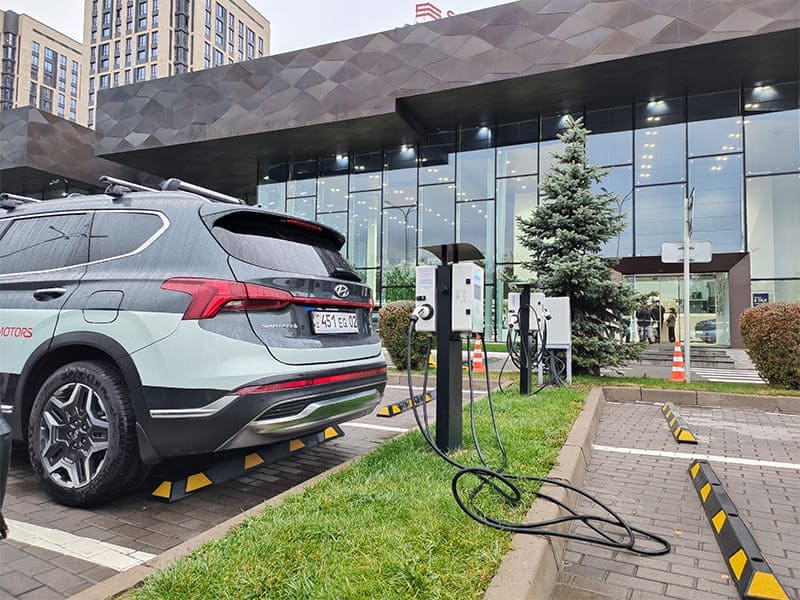
Today, most public AC points feature a Electric Vehicle charging station type 2 socket. You will find them at shopping centers, streets, and workplaces. For example, a typical public station has two connectors. One is often a Type 2 for slower charging. The other is a CCS for rapid DC charging. Importantly, the EV charger station type 2 is the universal AC option. Nearly every European EV model has this inlet. Therefore, drivers can charge at any AC point. This universality is its greatest strength.
The Home Charging Scenario
Similarly, the AC EV charger station type 2 connector dominates home charging. Most wallbox units sold are Type 2 models. They provide a convenient and faster home solution. Single-phase power is typical in UK homes. Conversely, three-phase power is more available in continental Europe. Regardless, the same physical connector is used. So, one cable can serve both home and public charging. This convenience simplifies the ownership experience greatly. What Is The Optimal EV Charging Station Layout For Maximum Efficiency?
Coexistence with DC Fast Charging
It is vital to note the role of DC fast charging. The Combined Charging System (CCS) is standard for rapid charging. Notably, the CCS Combo 2 plug extends the EV charging station type 2 connector. It adds two high-power DC pins below. So, the AC EV charger station type 2 remains the foundation. This design ensures broad infrastructure compatibility. Therefore, vehicles need only two inlets for all charging levels.
Future-Proofing and Smart Features
The Electric Vehicle charging station type 2 connector is future-proof. Its communication protocol enables advanced smart charging. For instance, it can support vehicle-to-grid (V2G) technology. This technology stabilizes the electrical grid. Moreover, it allows scheduled charging during off-peak hours. Consequently, the EV charging station type 2 is more than a plug. It is a key component for intelligent energy management.
Conclusion: A Unified Standard
In conclusion, the EV charging station type 2 is unequivocally the standard. This is true across both Europe and the United Kingdom. Its widespread adoption has ended connector chaos. It provides safety, functionality, and smart grid potential. The standard faces no credible challenger currently. Therefore, it will likely dominate the AC charging landscape for decades. Ultimately, this uniformity is a significant boost for electric mobility. It assures drivers of simple and reliable charging access everywhere.