
EV charging station distributors face a critical question today. Should they target homes or commercial hubs? The answer directly impacts their bottom line. Location dictates usage rates and revenue potential. It also influences equipment needs and partnership opportunities.
Understanding the Residential Market
Residential charging offers steady, predictable income. Homeowners typically charge overnight. This pattern uses Level 2 chargers like 7kW, 11kW, or 22kW units . EV charging station distributors often partner with automakers for these installations. For instance, professional teams have completed over 4,000 home charger installations for premium brands .
However, residential projects involve unique challenges. Installations require coordination with property managers. Multi-tenant buildings present complex approval processes. Yet, the demand remains strong. Drivers prefer charging where their cars park longest—at home .
The Commercial Opportunity
Commercial locations tell a different story. High-traffic areas generate significant revenue. Airports, supermarkets, and shopping centers attract EV drivers daily . Electric Vehicle charging station distributors increasingly focus on these destinations.
Consider fast-charging options for commercial clients. DC fast EV chargers range from 20kW to 320kW units. Some commercial stations feature multiple plugs—dual, triple, or quad connectors . These support various standards including CCS2, CCS1, GB/T, CHAdeMO, and NACS.
Moreover, visibility drives success at commercial sites. Optimal location visibility can improve performance by up to 21 percent . Accessibility matters too. Easily accessible stations generate 19 percent more turnover.
Why Aegen Supports Distributors
Aegen, a leading EV charging station manufacturer, understands these market dynamics. The company produces complete charging stations and component kits. They offer free technical support services. Customization options are also available for specific client needs.
Aegen partners with numerous EV charging station distributors worldwide. Their products operate across Central Asia, the Middle East, Europe, and South America. Additionally, Aegen manufactures EV charger testers. These tools help installation companies ensure quality and safety.
Key Commercial Applications
Commercial charging serves diverse environments. EV charging station distributors target several high-potential sectors:
Retail and service centers represent prime real estate. Large supermarkets and shopping malls attract steady visitor traffic. Drivers appreciate convenient charging while shopping.
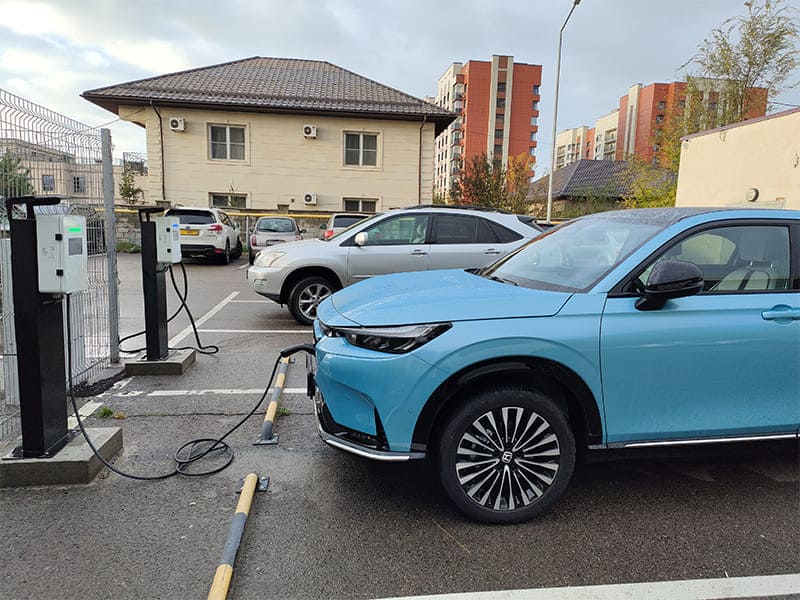
Transportation hubs offer another strong market. Airports, train stations, and highway service areas see constant vehicle flow. Fast chargers here meet urgent needs.
Workplace and fleet locations provide consistent usage. Office complexes, government facilities, and logistics centers benefit from depot charging. Fleet operators find clear ROI through predictable routes .
Factors Driving Profitability
Several elements determine location success. Electric Vehicle charging station distributors evaluate these carefully:
Traffic volume remains paramount. Locations with high daily vehicle counts perform best. Smartphone data now helps analyze passing vehicles on specific road segments .
Local activity matters significantly. Chargers near restaurants, cinemas, or gyms see higher usage. Drivers appreciate amenities during charging sessions.
Network connectivity influences investment decisions. Proximity to electrical infrastructure reduces installation costs. Ultra-fast charging requires substantial grid connections .
Market Trends Reshaping Strategy
The industry continues evolving rapidly. Smart charging networks create new opportunities. IoT-enabled stations allow real-time monitoring and load management .
Battery technology advances affect charger planning. New lithium-manganese-rich cathodes may soon extend vehicle ranges beyond 400 miles . This could shift charging patterns.
Used EV sales are surging dramatically. Cox Automotive data shows used EV sales growth reached 39 percent year over year in 2025 . More affordable vehicles bring new drivers to the market.
Balancing Both Worlds
Successful EV charging station distributors often maintain mixed portfolios. Residential business provides stable baseline revenue. Commercial projects offer higher growth potential.
Some distributors specialize in specific segments. For instance, companies like Zeplug focus on collective residential buildings and workplaces . Others concentrate on public fast-charging networks. Why Installation Sites Are the #1 Factor in Your EV Charging Station Company’s Success.
The owner-operator model gains traction commercially. Companies like Blink retain charger ownership, generating predictable income through usage fees . This approach transforms stations into infrastructure assets.
Conclusion
Location strategy defines success for EV charging station distributors. Residential markets offer consistency and strong partnerships. Commercial venues promise higher utilization and revenue. Forward-thinking distributors evaluate both carefully.
Manufacturers like Aegen support this balance through diverse product lines. From compact home units to powerful commercial stations, options abound. The right location—combined with quality equipment—maximizes earnings.
As EV adoption accelerates globally, smart site selection becomes even more critical. EV charging station distributors who master location strategy will lead the industry forward.