
The global shift toward electrified transportation has placed the Electric Vehicle EV charging station at the very heart of modern infrastructure development. As demand surges, understanding what separates a superior charging solution from an average one has become critical for businesses and governments alike. A high-quality Electric Vehicle EV charging station is not merely a power delivery point; it is a sophisticated system engineered for safety, durability, and intelligence.
The Architectural Core: Beyond the EV charging Cable
To the average user, a charger may seem simple. However, the internal architecture defines performance. Fundamentally, a premium unit relies on meticulously engineered components that govern communication, power conversion, and safety.
The Brain of the Operation: Self-Developed Control Units
At the forefront of this technological precision is Aegen New Energy, a manufacturer distinguished by its robust research and development capabilities. Unlike assemblers who source generic parts, Aegen has self-developed the core Charging Control Unit (CCU) for its DC fast chargers. This component acts as the central nervous system, managing the entire charging session in real time.
Additionally, Aegen’s ecosystem includes the PCU, OCU, and SECC modules. These parts work in unison with the charging module to ensure seamless energy transfer. Consequently, this integrated approach guarantees that every Electric Vehicle EV charging station performs reliably under diverse conditions.
Power Conversion and Distribution
High-quality stations utilize advanced power fast charging modules to convert grid AC power to vehicle-ready DC power. Furthermore, thermal management is crucial. Superior units employ intelligent cooling systems to maintain optimal operating temperatures, thereby extending component lifespan and ensuring consistent output.
Safety Mechanisms: Non-Negotiable Protections
Safety defines quality in this industry. For AC charging solutions, Aegen integrates self-developed control technologies, including the Type B RCCB and RCMU. These components provide comprehensive protection against earth faults and residual currents. Therefore, operators can deploy these stations with confidence in public and residential settings.
Global Compatibility: The Connector Matrix
A universal truth in the EV industry is that plug types vary by region. Consequently, a world-class Electric Vehicle EV charging station must offer comprehensive compatibility.
For DC fast charging, Aegen supports the full spectrum of global standards. These include CCS2, CCS1, GB/T, CHAdeMO, and NACS. Similarly, for AC charging, the company manufactures solutions compatible with Type 1, Type 2, GB/T, and NACS. This versatility ensures that whether a station is deployed in Europe, Asia, or North America, it meets local requirements perfectly.
The Assembler‘s Advantage: Aegen’s Component Sales Model
A significant trend shaping the industry involves local assembly. Many manufacturers prefer to purchase core components and assemble chargers locally to reduce shipping costs and meet local content regulations. Notably, numerous prominent charging brands purchase complete kits from Aegen and then perform final assembly in their home markets.
This model works because Aegen provides more than just hardware. They supply the complete technological package, enabling assemblers to produce world-class Electric Vehicle EV charging station units locally. Furthermore, this approach accelerates market entry and supports regional job creation.
Quality Assurance: In-House Testing
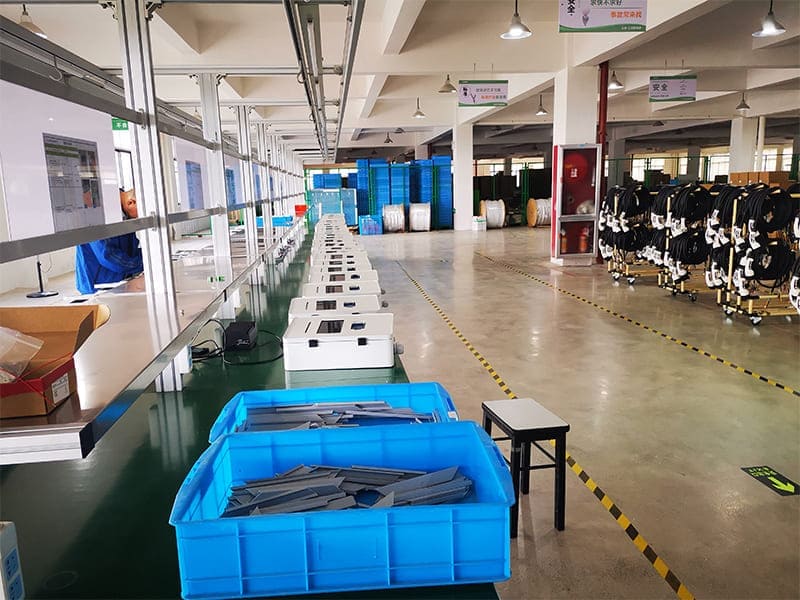
Reliability cannot be assumed; it must be verified. Therefore, rigorous testing is a cornerstone of premium manufacturing. Aegen has developed its own EV charger tester, a sophisticated device used to validate performance before shipment. Significantly, this testing equipment is also sold to other manufacturers, underscoring the depth of Aegen’s technical expertise. This commitment ensures that every component leaving the factory meets stringent operational standards.
Software and User Experience
While hardware is vital, software defines the user experience. A high-quality Electric Vehicle EV charger station features an intuitive interface and robust communication protocols. Users expect seamless authentication, real-time status updates, and reliable connectivity. Moreover, operators require backend integration capabilities for monitoring and revenue management.
Mechanical Integrity and Durability
Outdoor installation demands resilience. Premium stations feature rugged enclosures with high Ingress Protection (IP) ratings. Consequently, they withstand dust, moisture, and temperature extremes. Additionally, the charging cable and connector must endure thousands of insertion cycles without failure. Aegen addresses this by offering high-grade charging cables tailored to regional connector types.
Future-Ready Architecture
Technology evolves rapidly. Therefore, forward-thinking stations are designed with modularity and upgradability in mind. This allows operators to incorporate new features, such as bidirectional charging (V2G), as the market matures. Aegen’s design philosophy embraces this flexibility, ensuring long-term relevance for their partners.
The Economic Perspective
For businesses investing in infrastructure, total cost of ownership matters most. A premium Electric Vehicle EV charging station reduces downtime and maintenance costs. By sourcing from a manufacturer with proven quality control and self-developed core components, operators achieve a lower risk profile and higher return on investment. Residential or Commercial? EV Charging Station Distributors Weigh Location Impact on Earnings.
Conclusion: The Aegen Difference
In a crowded market, the distinction lies in engineering integrity. Aegen New Energy exemplifies the standards required for next-generation infrastructure. From the self-developed CCU driving DC fast chargers to the advanced protection in AC units, every element is designed for excellence. Whether purchasing complete charging stations for direct deployment or sourcing components for local assembly, the industry increasingly turns to Aegen. Their in-house research, combined with rigorous testing via proprietary EV charger testers, ensures that every Electric Vehicle EV charging station bearing their technology delivers unparalleled performance.
As the world accelerates toward an electric future, the quality of the Electric Vehicle EV charging station will determine the speed and reliability of that transition. With innovators like Aegen leading the way in component technology and design, the infrastructure is being built to last.