
The landscape for the EV charging station in Malaysia is undergoing a radical transformation. Recent data shows Public EV charging station installations have exceeded national targets by 128%. Consequently, the market is no longer about quantity but strategic positioning. As of early 2026, Malaysia has 5,624 public charging units, yet the focus has shifted to where they are placed. Therefore, understanding the prime locations is essential for investors and operators. This article explores the five key sites dominating the sector right now.
1. High-Traffic Retail Hubs: The New Power Centers
Firstly, large supermarkets and shopping malls have become battlegrounds for operators. These locations offer high visibility and foot traffic. For instance, high-capacity DC fast EV charging stations are now standard in major mall parking areas. Operators like Gentari and TNB Electron are aggressively deploying 60kW to 240kW units here. Moreover, these spots allow drivers to shop while their vehicle charges. This model turns waiting time into productive time. As a result, retail hubs currently host a significant portion of the nation’s fast-charging infrastructure.
2. Highway Corridors: Solving Range Anxiety
Similarly, major highway rest stops are critical for long-distance travel. The PLUS Expressway and other key routes are seeing increased DC coverage. These locations require high-power, reliable hardware. Specifically, units ranging from 180kW to 360kW are becoming the norm to minimize stop times. Consequently, demand here is driven by travelers requiring quick top-ups. This segment relies heavily on the latest EV charging station in Malaysia technology to ensure seamless intercity travel.
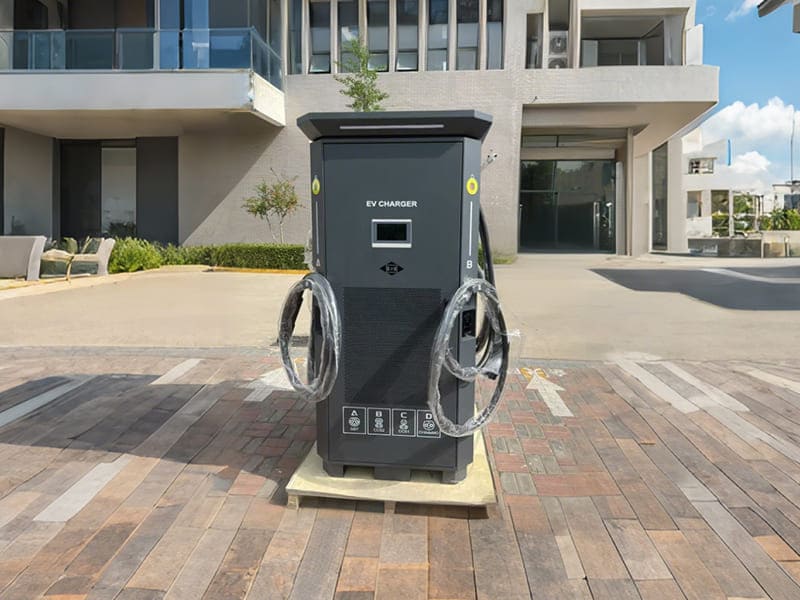
3. Urban Transit Nodes: Catching the Commute
Furthermore, transportation hubs like airports and train stations are vital. These areas are densely populated with vehicles and require long-term parking. Airport parking lots, for example, are ideal for both AC and DC charging solutions. In addition, they serve taxis and ride-hailing fleets waiting for passengers. Therefore, these nodes ensure that vehicles are always ready for the next trip.
4. Corporate and Fleet Bases: The Operational Backbone
Meanwhile, commercial fleets and office parks represent a stable demand source. Logistics companies are electrifying delivery vehicles, requiring depot-based charging. For example, offices are installing chargers for employee use during work hours. This creates a predictable load on the grid. Additionally, government incentives are encouraging this shift. The need for durable, smart EV charging station in Malaysia units in these settings is rising sharply. These locations prioritize overnight and workday charging cycles.
5. Residential Communities: The Night-Time Standard
Finally, condominiums and planned residences are emerging as key locations. Since home charging is cheaper, its promotion is a government priority. However, many urban dwellers lack landed property. Therefore, shared AC EV chargers in apartment blocks are essential. These residential EV charging station in Malaysia points handle the bulk of overnight charging. They form the foundation of the daily charging routine for most owners.
The Technology Driving the Expansion
Behind these locations, robust hardware makes the network possible. Companies like Aegen are supplying the market with diverse solutions. They offer commercial DC fast chargers from 20kW to 320kW for retail sites. Their product line includes various plug types like CCS2 and CHAdeMO. Furthermore, Aegen provides AC chargers (7kW-22kW) perfect for residential and office use. They also supply testing equipment for installation companies. Their global experience spans markets in Europe, South America, and the Middle East. This demonstrates the international standards now expected locally. Why Multi-Year Location Planning for Your EV Charging Station in NZ Ensures Long-Term Profit?
Conclusion: A Strategic Market
In conclusion, the dominance of these five location types shapes the entire industry. The focus has moved from simply counting units to strategic placement. Whether in a mall, on a highway, or at home, the context matters. Ultimately, the growth of the EV charging station in Malaysia depends on this strategic, location-based approach. The infrastructure is now being built where people actually need it.