
Hotel guests increasingly expect seamless electric travel. An EV charging station for hotels now serves as a key amenity. This choice directly impacts guest satisfaction and booking rates. You, as a hotelier, face a crucial decision. Should you install Level 2 or DC fast EV chargers? This article compares both options. You will discover how speed influences occupancy.
The Case for Level 2 Charging
Level 2 EV chargers offer a reliable overnight solution. They provide between 10 to 20 miles of range per hour. This speed suits most overnight hotel stays. Guests typically sleep for eight hours. They wake to a full battery. Therefore, this option works perfectly for destination hotels. You can serve many guests at a lower cost.
Transitioning to benefits, Level 2 units cost significantly less to install. Each port requires only a 200-380V circuit. Additionally, electricity demand charges remain very low. Maintenance is also simpler and cheaper. Consequently, you can deploy multiple units for the same price as one fast charger.
However, consider the guest profile. A business traveler stopping for six hours needs ample range. A family on a road trip may arrive at 20% battery. Level 2 fully charges most EVs by morning. For these scenarios, an EV charging station for hotels with Level 2 ports works wonderfully. Nevertheless, it cannot serve quick turnaround visits.
The Power of DC Fast Charging
DC fast charging transforms short stays into valuable charging windows. These systems deliver 40 to 320 kW of power. Consequently, they add 100 to 200 miles of range in just 15 to 30 minutes. A guest stopping for a meal or a one-hour meeting leaves with ample charge. This speed drives higher occupancy for highway-adjacent properties.
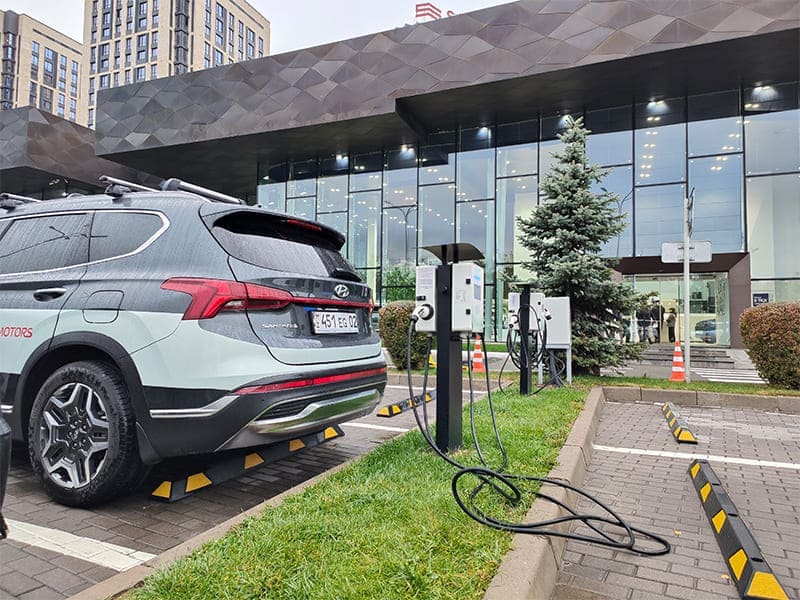
On the other hand, fast charging involves higher stakes. Demand charges from utilities can spike monthly bills drastically. You also need significant electrical infrastructure upgrades. Despite these hurdles, DC fast chargers attract a lucrative segment. Travelers with time constraints actively seek such properties.
Moreover, you can generate notable revenue per session. A 30-minute charge at 60 kW yields higher per-minute income. Some hotels partner with charging networks to share revenue. Thus, a DC fast charging station for hotels becomes a profit center. Still, you must balance this against slower Level 2 economics.
Comparing Key Factors for Your Property
First, analyze your average guest stay duration. Resorts and airport hotels favor Level 2 solutions. Conversely, roadside hotels with brief stays need DC speeds. Second, examine local EV adoption rates. High adoption justifies faster chargers. Third, consider your electrical capacity. Upgrading a 200A service to 800A costs tens of thousands.
Fourth, think about scalability. Start with Level 2 units for baseline coverage. Then, add one or two DC fast chargers for premium service. This hybrid approach works for many mid-sized hotels. Fifth, evaluate available incentives. Federal and state programs often cover 30% to 80% of costs. These programs apply to any EV charging station for hotels.
Importantly, you must adopt ISO 15118 standard protocol. This standard enables plug-and-charge functionality. Guests simply plug in, and the car authenticates automatically. Consequently, no app or RFID card is needed. This seamless experience increases guest delight. Additionally, smart charging features help you manage energy costs. You can schedule charging during off-peak hours. You can also balance loads across multiple units.
Real-World Impact on Occupancy Rates
Data from early adopters shows clear trends. Hotels with Level 2 chargers see a 15% increase in repeat bookings. Properties with DC fast chargers command higher nightly rates. Travelers pay $10 to $20 more per night for fast charging access. Furthermore, these hotels appear first in EV driver search filters. Online travel agencies now highlight charging availability prominently.
One case study involves a California highway hotel. You install two DC fast chargers alongside four Level 2 ports. Occupancy rose 22% within six months. Average length of stay also increased by one night. Guest reviews frequently mention the charging convenience. Thus, a well-planned EV charging station for hotels directly boosts revenue.
Another example features a Florida resort. You deploy only Level 2 units across 50 parking spaces. Occupancy for EV owners reached 94% versus 78% for others. Clearly, even basic charging attracts this demographic. Yet, the resort missed quick-turnover guests. Adding just one fast charger later captured that market. EV charging station for store: From Parking Lot to Profit Center – Monetize Waiting Time with DC Fast Charging.
Recommendations for Your Hotel
First, audit your guest stay patterns. If most stays exceed eight hours, prioritize Level 2. Install at least four ports for every 50 rooms. Second, if you see many one-night business trips, add one DC fast EV charging station. Position it near the entrance for visibility. Third, ensure all chargers comply with ISO 15118. This future-proofs your investment. Fourth, enable smart charging to reduce demand charges.
Finally, market your chargers effectively. List your EV charging station for hotels on PlugShare and Google Maps. Update your website and booking confirmation emails. Train front desk staff to highlight this amenity. Remember, a reliable EV charging station for hotels creates loyalty. Guests will choose your property over competitors. Speed, when matched to guest needs, truly drives higher occupancy.