
The electric vehicle charging war intensifies. A major shift is happening. The NACS EV charging station standard is gaining dominance. Previously, CCS was the main choice. This change affects all EV drivers. Manufacturers are choosing sides rapidly. Understanding the differences is crucial. Our guide explains everything for you.
The Charging Standard Showdown
First, what are these standards? CCS means Combined Charging System. It is a widespread plug design. It uses separate pins for AC and DC. The NACS plug is different. NACS stands for North American Charging Standard. It was developed by Tesla originally. Now, it is becoming an open standard. Its design is more compact and elegant. Many automakers are now adopting it. This includes Ford and General Motors. Others like Rivian also joined. This creates a significant industry shift.
Key Technical Differences Explained
The physical connector is the main difference. The CCS1 plug is rather bulky. The NACS EV charging station uses a slimmer connector. It is much easier to handle. Furthermore, NACS is a single-port system. It combines AC and DC charging. CCS uses two separate communication pins. Technically, NACS can deliver high power. It efficiently supports over 900 amps. Consequently, charging speeds are very impressive. The user experience is often smoother. However, CCS networks are currently more extensive. This is changing quickly, though.
Why the Industry is Shifting to NACS
Several key factors drive this change. Primarily, Tesla’s Supercharger network is vast. It is also very reliable. Therefore, access is a huge advantage. The NACS connector design is superior. It is smaller and easier to use. Automakers want this convenience for customers. Adopting the NACS EV charging station standard simplifies production. It reduces costs and complexity. Ultimately, it promises a unified charging experience. This fragmentation resolution benefits everyone. The market is clearly voting for standardization.
Global Manufacturers Like Aegen New Energy Adapt
Companies worldwide are responding to this shift. For instance, Aegen New Energy is adapting. This Chinese manufacturer produces diverse charging stations. They sell home and public EV charging station solutions. They also offer free technical support. Customization services are available too. Aegen partners with many global distributors. They also supply parts to assembly companies. Their products are sold across several continents. These include Asia, Europe, and South America. Their equipment has earned strong customer praise.
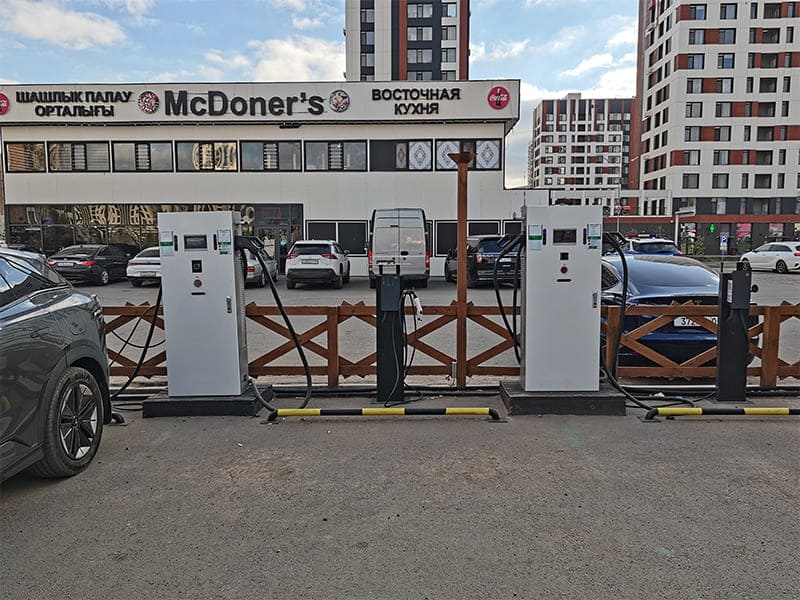
Aegen’s Commercial DC Fast Charging Solutions
Aegen’s commercial offerings are particularly robust. They feature power from 20kW to 320kW. Their NACS Electric Vehicle charging station models are versatile. They come with dual, triple, or quadruple dispensers. They also offer split-type charging systems. These are ideal for large parking areas. Furthermore, they support multiple plug standards. These include CCS1, CCS2, and GB/T. CHAdeMO and NACS plugs are also available. This ensures compatibility with various vehicle brands. Their fast EV charging stations serve many high-traffic locations.
Ideal Applications for Commercial Stations
These stations fit numerous commercial settings. First, high-traffic retail locations are perfect. These include supermarkets and shopping malls. Secondly, transport hubs benefit greatly. Airports and train stations need reliable charging. Highway service areas are also critical. Additionally, corporate office parks are ideal. Government buildings and hotels use them too. Finally, fleet depots are key users. Taxi stands and bus stations utilize them. Restaurants and stadiums also install them. A reliable NACS EV charging station serves all.
The Compatibility Challenge for Current EVs
Existing CCS-equipped cars face a challenge. They cannot use a native NACS Electric Vehicle charging station. However, adapters will solve this problem. Automakers will provide these adapters. Soon, drivers will get seamless access. Meanwhile, new vehicles will have native ports. Charging networks are updating hardware. Many stations will feature dual cables. So, both standards will coexist temporarily. The transition, however, will take some time. Planning ahead is wise for all drivers.
What This Means for EV Drivers
For consumers, this is mostly positive. Eventually, charging will be more convenient. Finding a compatible NACS EV charging station will be easy. Road trips will become less stressful. The user experience will improve significantly. Yet, short-term confusion may occur. Drivers must check their vehicle’s port type. They should also research network compatibility. Fortunately, the long-term outlook is excellent. A unified standard simplifies everything. Ultimately, this accelerates EV adoption.
The Future of EV Charging Infrastructure
The future points toward NACS dominance. More automakers will announce support. Charging networks will expand aggressively. Companies like Aegen will supply this demand. Their flexible NACS EV charging station products will help. The infrastructure will become more reliable. Interoperability will finally be achieved. This progress will remove a major barrier. Consequently, EV sales will likely increase. The transition to electric transportation accelerates. Buying Guide: How to Choose the Best 220 Volt EV Charging Station.
Conclusion: One Plug to Rule Them All?
The battle between standards is concluding. The NACS EV charging station is the likely winner. Its technical and network advantages are clear. The industry is consolidating around it. Global manufacturers support this transition. Therefore, consumers should welcome this change. It promises a simpler, faster charging future. The era of charging confusion is ending. Soon, one plug will connect most vehicles. That plug will undoubtedly be NACS.